Dedicated Trucking vs Shared Freight: Which Option Is Best for Your Business?
- ULS Freight
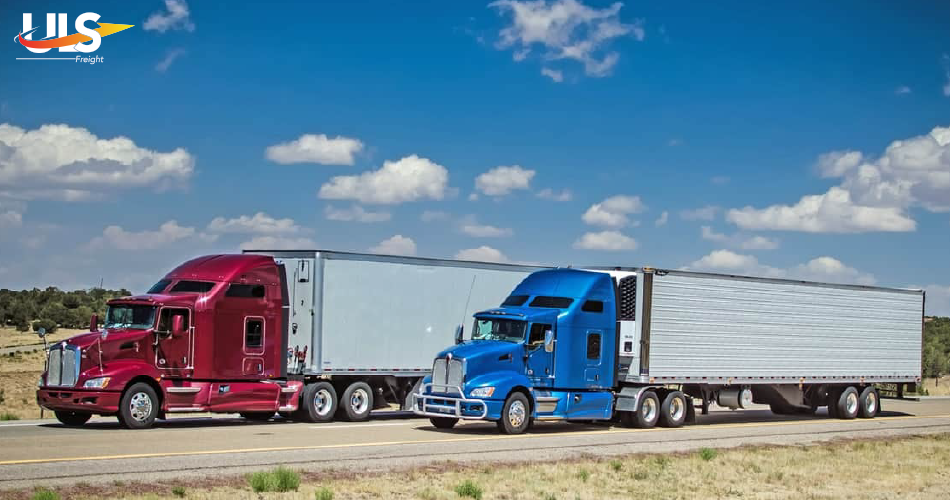
If you run a distribution operation, a manufacturing facility, or a retail supply chain in Canada, the choice between dedicated trucking and shared freight is one of the most financially significant decisions in your logistics program. Get it right and you have a supply chain that costs less, delivers reliably, and scales with your business. Get it wrong and you are either overpaying for capacity you do not need or absorbing service failures because shared carriers cannot prioritise your freight when demand spikes.
Struggling with oversized cargo transportation challenges? This detailed Flatbed Freight Services Solution Page explains how expert freight handling ensures secure transport for heavy equipment, building materials, and industrial shipments without delays
ULS Freight works with Canadian manufacturers, food distributors, automotive parts suppliers, and retail chains on both sides of this decision daily. The right answer depends on your freight volume, your delivery consistency requirements, your lane profile, and your tolerance for rate and service variability. This guide gives you the specific criteria to evaluate your situation and make the choice that actually fits your operation.
Understanding Dedicated Trucking vs Shared Freight
- Dedicated trucking: your freight moves on a specific truck committed exclusively to your loads.
- Shared freight (LTL): your freight shares trailer space with other shippers’ loads moving in the same direction.
- Dedicated is better when: volume fills at least 70 percent of a trailer consistently on a given lane.
- Shared is better when: shipment weights are below 10,000 kilograms and delivery windows are flexible.
- Hybrid programs: most mid-sized Canadian businesses benefit from dedicated on high-volume lanes and shared on irregular or lower-volume ones.
Not sure whether dedicated or shared freight is right for your specific lanes? Contact ULS Freight today. We will analyse your shipping profile and show you exactly which model costs less and performs better for your operation.
Struggling with inconsistent delivery timelines or inefficient freight handling? This detailed Ground Freight Trucking Service Overview explains how advanced ground logistics improve route planning, shipment tracking, and overall supply chain efficiency for businesses of all sizes
When Dedicated Trucking Pays for Itself
For a food and beverage manufacturer in Ontario moving full loads to a retail distribution centre in Alberta three times per week, dedicated trucking is almost always the correct choice. The volume is consistent, the delivery windows are strict, and the cost of a failed or delayed delivery, measured in retailer chargebacks and shelf availability penalties, far exceeds any premium paid for dedicated capacity. Dedicated trucking gives you a driver who knows your loading process, a truck that arrives on your schedule, and a carrier relationship where your freight is never bumped for another customer’s higher-margin load.
Automotive parts manufacturers supplying just-in-time assembly plants face the same calculus. A missed delivery window at an automotive assembly plant stops production at a cost of thousands of dollars per minute. No spot market carrier rate is low enough to justify that risk. Dedicated trucking with a fixed schedule and a vetted driver is the only responsible choice for time-critical supply chains where the downstream cost of failure is extreme. ULS Freight structures dedicated trucking programs around the specific schedule and compliance requirements of your operation.
Industries That Benefit Most from Dedicated Trucking
- Food and beverage manufacturers: dedicated trucking protects temperature integrity and retailer delivery compliance.
- Automotive parts suppliers: just-in-time schedules require the certainty that only dedicated capacity provides.
- Retail chains with DC replenishment: consistent volume and strict receiving windows justify dedicated lane commitments.
- Pharmaceutical distributors: dedicated drivers familiar with chain-of-custody and temperature requirements reduce compliance risk.
- Construction and industrial suppliers: project-site deliveries with fixed windows and specialised equipment require dedicated coordination.
When Shared Freight Delivers Better Value
A growing e-commerce brand shipping 200 to 800 kilograms per order to multiple destinations across Canada does not need dedicated trucking. Shared LTL freight gives this business access to coast-to-coast carrier networks, competitive per-shipment rates, and the flexibility to scale volume up or down without a committed capacity obligation. Paying for a dedicated truck when the load only fills 30 percent of a trailer is paying 70 percent of a truck’s cost to move nothing. Shared LTL eliminates this waste entirely.
Professional services firms, healthcare supply companies shipping non-time-critical medical consumables, and technology hardware distributors with irregular order patterns all benefit from shared freight programs managed by ULS Freight. The key is ensuring your shared freight is managed by a partner who has negotiated carrier rates below what you could access independently, audits every invoice for billing errors, and provides shipment tracking that keeps you informed without requiring you to chase carriers directly.
Businesses That Benefit Most from Shared Freight
- E-commerce businesses with sub-full-truckload shipment sizes benefit from LTL economics on every lane.
- Healthcare consumables distributors with irregular order patterns avoid committed capacity costs with shared freight.
- Technology hardware distributors shipping to multiple destinations across Canada benefit from LTL network access.
- Seasonal businesses whose volume fluctuates by 50 percent or more between seasons avoid over-committing to dedicated capacity.
- Businesses entering new geographic markets can test lanes with shared freight before committing to dedicated capacity.
ULS Freight designs freight programs that match the right mode to every lane in your operation. Contact our team today and let us build a program that cuts your costs without cutting your service levels.
Make the Right Call for Your Supply Chain: Get a Lane-by-Lane Analysis
The most effective freight programs in Canada are not purely dedicated or purely shared. They are lane-specific decisions made with full cost data on both options. ULS Freight conducts lane-by-lane analysis for every client considering a program change, comparing the all-in cost of dedicated trucking against the all-in cost of managed LTL on every lane the client operates. The result is a freight program where each lane is on the mode that costs less and performs better for its specific volume and service requirements.
Want to improve customer satisfaction with premium delivery experiences? Learn how end-to-end logistics support works in this White Glove Logistics Service Overview and see how signature-required delivery, packaging removal, and setup services elevate your supply chain performance.
Whether you run a single distribution lane or a national freight program across twenty lanes, ULS Freight has the carrier relationships, the data, and the operational expertise to design a program that outperforms what you are running today. The analysis is specific to your freight. The savings are real and measurable. The conversation starts today.
Request a dedicated versus shared freight analysis from ULS Freight. Bring your lane data and your current carrier costs. We will deliver a specific recommendation for every lane in your program within five business days.
Frequently Asked Questions
Q1. At what shipment weight should a Canadian business switch from LTL to dedicated trucking?
The general threshold is when your per-lane shipment weight consistently exceeds 10,000 to 15,000 kilograms, at which point the per-kilogram cost of LTL typically exceeds the equivalent dedicated FTL rate. The exact crossover depends on the lane, the commodity, and the service level required. ULS Freight calculates this crossover point for each specific lane rather than applying a generic rule.
Q2. Can a small business access dedicated trucking rates in Canada?
Yes, through a freight partner like ULS Freight that aggregates volume across multiple clients to negotiate carrier rates that individual small businesses cannot access independently. ULS Freight can structure dedicated-style lane commitments for smaller businesses by combining their volume with other compatible clients on the same lane, giving small businesses the service consistency of dedicated freight at rates closer to LTL.
Q3. How does shared LTL freight affect delivery time compared to dedicated trucking?
Dedicated trucking delivers direct, point-to-point with no intermediate stops or terminal handling. LTL freight moves through carrier terminals and may make multiple stops before reaching the destination. For most Canadian LTL lanes this adds one to two transit days compared to direct dedicated movement. For time-critical shipments, this transit time difference is a significant factor in the dedicated versus LTL decision.
Q4. What happens to my dedicated trucking rate when my volume drops seasonally?
Dedicated trucking agreements typically require a minimum volume commitment. When actual volume falls below the minimum, you pay for the committed capacity regardless of how much you actually use. This is why ULS Freight recommends sizing dedicated commitments to your reliable minimum volume rather than your peak, and using spot or LTL freight to handle the additional volume during peak periods.
Q5. Does ULS Freight offer guaranteed delivery windows on dedicated trucking lanes?
Yes. Dedicated trucking programs managed by ULS Freight include defined pickup and delivery windows with performance measurement against those commitments. On-time performance is tracked for every dedicated load and reported to clients in monthly performance reviews. Carriers whose on-time performance falls below agreed thresholds are subject to rate adjustments or replacement under the terms of the ULS Freight carrier agreement.
About ULS Freight
We are Road freight forwarder based in Canada, and offering our road freight services all across the USA, Canada, and Mexico for the last 10 years.
Recent Posts

The Global Supply Chain Crisis: How Logistics Companies Are Responding

Cross-Border Freight Challenges: Navigating Compliance in a Global Market

Freight Forwarding vs. Freight Brokering: Explore the Best Option For Yourself

Top 5 Strategies to Reduce Freight Shipping Costs Without Compromising Speed

The Impact of Canada’s Harsh Winters on Supply Chains & How ULS Freight Helps

Choosing Between Air & Sea Freight for Your Business – The Complete Guide

How 3PL Logistics Solutions Improve Supply Chain Efficiency for Modern Businesses
Ultimate Guide to White Glove Delivery

Freight Forwarding Services: A Complete Guide to Canadian and Cross-Border Shipping