Reverse Logistics: Streamlining Returns for Canadian & USA Businesses
- ULS Freight
Reverse Logistics: The Key to Efficient Returns and Sustainable Supply Chains
In today’s fast-paced e-commerce and logistics landscape, reverse logistics is essential for businesses that want to maintain customer satisfaction and optimize operational efficiency. At ULS Freight, we specialize in reverse logistics solutions that help Canadian and USA businesses manage returns, repairs, recycling, and product resale seamlessly.
Fast, reliable full truckload shipping. Get your FTL freight quote today with ULS Freight.
From improving customer experience to supporting sustainability, reverse logistics is more than just a supply chain necessity—it’s a competitive advantage.
What is Reverse Logistics?
Reverse logistics is the process of moving goods backward through the supply chain, from the customer back to the manufacturer, distributor, or retailer. Unlike traditional logistics, which focuses on delivery, reverse logistics manages:
Returns due to defects, wrong orders, or customer preference
Refurbishment and repair of damaged items
Recycling and eco-friendly disposal
Resale through secondary channels
This backward movement captures value, reduces waste, and supports a circular economy, aligning with sustainability goals for businesses in Canada and the USA.
Secure flatbed trucking for oversized loads. Request a flatbed trucking quote now.
Key Components of Reverse Logistics
Understanding the components of reverse logistics is essential for any business that handles product returns efficiently.
Returns Management
Returns management is the core of reverse logistics, ensuring that products returned by customers are processed quickly and accurately.
Inspecting and sorting returned items
Determining whether products can be restocked, repaired, or recycled
Updating inventory systems to reflect returned goods
Example: A Canadian electronics retailer uses reverse logistics to manage returned smartphones, quickly refurbishing and reselling them to reduce losses.
Repair and Refurbishment
Repairing and refurbishing returned goods extends their life and recovers value:
Fixing defective or damaged products
Repackaging items for resale
Ensuring quality standards are met before resale
This not only reduces waste but also creates a revenue stream from products that would otherwise be discarded.
Recycling and Eco-Friendly Disposal
Reverse logistics plays a crucial role in sustainability:
Disassembling products to recover reusable materials
Proper disposal of non-recyclable components
Reducing landfill waste and meeting ESG requirements
Real-world example: ULS Freight partners with recycling facilities to ensure packaging and unused electronics from returned shipments are disposed of responsibly in Canada.
Reliable ground freight across Canada & USA. Book your ground freight service today.
Resale and Remarketing
Products that are still in good condition can be sold through secondary markets:
Outlet stores or online marketplaces
Wholesalers and B2B channels
Clearance or refurbished product sections
This step helps recover costs and reduces financial loss while maintaining brand reputation.
Why Reverse Logistics is Important for Businesses
Implementing reverse logistics can provide measurable benefits for businesses in North America:
Improved Customer Satisfaction
Quick and efficient returns enhance the customer experience, leading to loyalty and repeat purchases.Cost Savings and Value Recovery
Recovering value from returned goods reduces the need to produce new items, saving costs on raw materials and manufacturing.Sustainability and Circular Economy Goals
Reverse logistics supports recycling, eco-friendly disposal, and material recovery initiatives.Supply Chain Resilience
Proper management of returns and repairs can provide alternative inventory and materials during supply chain disruptions.
According to DHL, businesses implementing robust reverse logistics practices can recover up to 15% of lost revenue from returns and reduce operational costs by up to 20%.
Scalable 3PL logistics and fulfillment solutions. Get your 3PL logistics quote now.
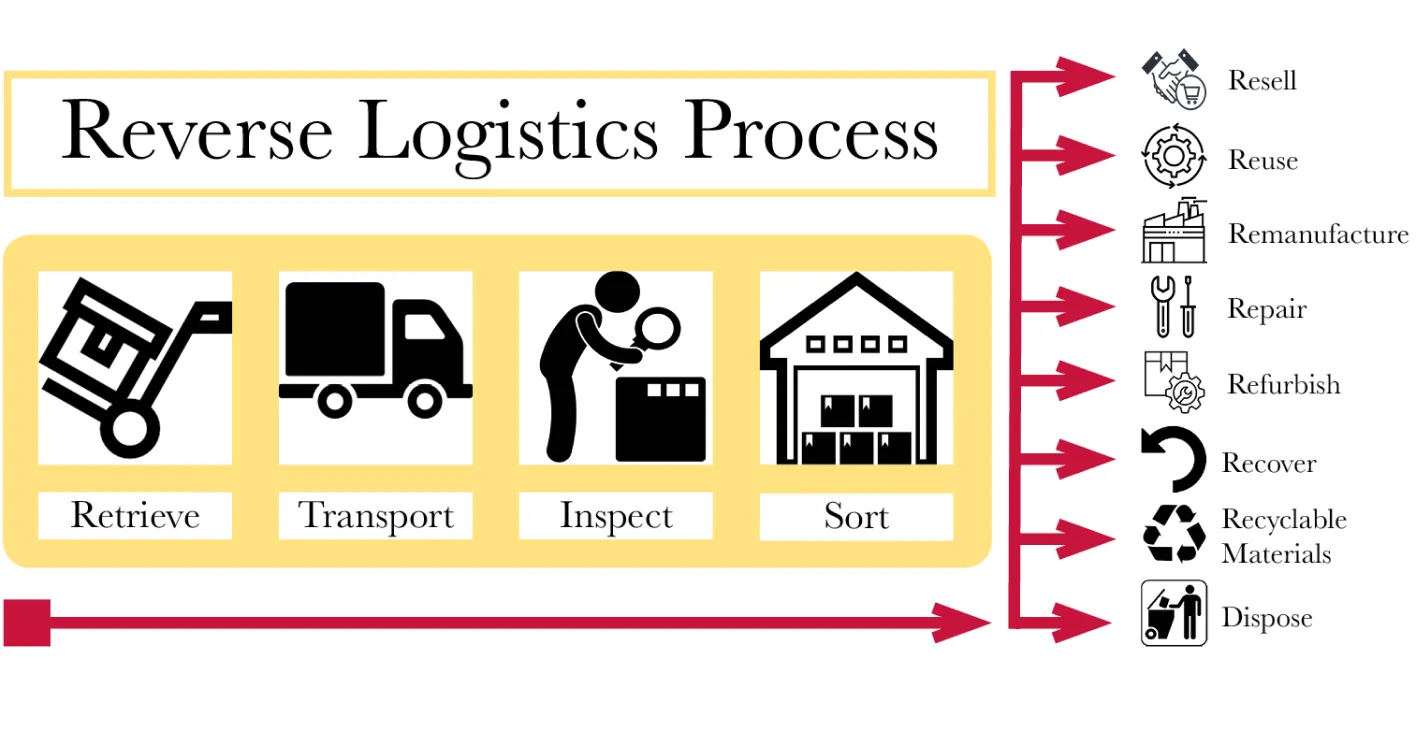
The Reverse Logistics Process
A simplified reverse logistics workflow ensures efficiency and value recovery:
Customer Initiates Return – The consumer returns a product via courier or in-store.
Collection and Transport – The item is shipped back to the warehouse or processing center.
Inspection and Sorting – Staff assess whether the item can be restocked, repaired, recycled, or disposed of.
Disposition and Follow-Up – The product is either returned to inventory, sent for refurbishment, or recycled/disposed of responsibly.
ULS Freight’s specialized reverse logistics services streamline each step, ensuring businesses in Canada and the USA benefit from faster processing times and reduced losses.
Types of Reverse Logistics
Businesses can implement reverse logistics in different forms depending on their operational needs:
Return Logistics – Handling standard customer returns efficiently
Repair Logistics – Managing defective or damaged products
Recycling and Waste Management – Ensuring products and packaging are disposed of responsibly
Asset Recovery Logistics – Recovering valuable materials and components for reuse
Each type can be tailored to specific industries, such as e-commerce, electronics, retail, or industrial manufacturing.
Best Practices for Reverse Logistics
Implementing reverse logistics requires strategic planning and technology integration. Best practices include:
Use a centralized returns management system to track items and automate workflows
Partner with reliable transport providers to ensure timely returns
Analyze return reasons to identify product or process improvements
Incorporate eco-friendly disposal practices to reduce environmental impact
Train staff in inspection, sorting, and repair procedures
ULS Freight provides businesses with advanced reverse logistics solutions, including tracking, inspection, and recycling support, reducing processing time by 30% compared to manual methods.
Premium white glove delivery across Canada & USA. Book your white glove service now.
Real-World Applications of Reverse Logistics
Several industries rely heavily on reverse logistics:
E-commerce Retailers – Managing high volumes of online returns efficiently
Electronics Manufacturers – Refurbishing and reselling returned devices
Automotive – Returning defective parts for repair or recycling
Healthcare – Managing expired or recalled medical supplies safely
Apparel & Fashion – Handling clothing returns, restocking, and recycling fabrics
In each case, reverse logistics improves operational efficiency, reduces waste, and enhances customer satisfaction.
How ULS Freight Supports Reverse Logistics in Canada and USA
ULS Freight offers end-to-end reverse logistics services tailored to the needs of Canadian and USA businesses:
Seamless management of product returns, repairs, and refurbishments
Partnerships with certified recycling centers for eco-friendly disposal
Data-driven insights to reduce return rates and increase resale value
Real-time tracking and reporting for every step of the reverse logistics chain
By leveraging ULS Freight’s expertise, businesses can streamline operations, recover value from returns, and align with sustainability goals without compromising customer experience.
Conclusion
Reverse logistics is no longer optional—it’s a strategic necessity for businesses in Canada and the USA. From improving customer satisfaction to supporting sustainability and recovering value, it strengthens the supply chain at every level.
At ULS Freight, we deliver specialized reverse logistics solutions designed to streamline returns, refurbishments, and recycling, giving businesses the efficiency and reliability they need in today’s competitive market. Partnering with ULS Freight ensures that your reverse logistics operations are seamless, cost-effective, and future-ready.
FAQ on Reverse Logistics
What is reverse logistics in simple words?
Reverse logistics is the process of moving goods from customers back to manufacturers, distributors, or retailers for returns, repairs, recycling, or resale. Unlike standard delivery logistics, it manages the upstream flow of products for value recovery, sustainability, and customer service.
Why is reverse logistics important?
Reverse logistics improves customer satisfaction, lowers operational costs, recovers value from returned products, supports sustainability goals, and enhances supply chain resilience for businesses in Canada and the USA.
What are the main steps in reverse logistics?
The reverse logistics process typically includes:
Customer initiates a return
Collection and transport back to the warehouse or processing center
Inspection and sorting of returned items
Repair, refurbishment, recycling, resale, or proper disposal
What are the benefits of reverse logistics?
Streamlined returns increase customer loyalty
Refurbishment and resale recover lost revenue
Recycling and responsible disposal reduce waste
Enhanced brand reputation and operational efficiency
What are the 5 R’s of reverse logistics?
The 5 R’s represent the core strategies in reverse logistics:
Return – Managing customer returns efficiently
Repair – Fixing damaged or defective products
Refurbish – Restoring items for resale
Recycle – Disassembling products to recover materials
Resale – Selling returned or refurbished products through alternate channels
What are the 7 R’s of reverse logistics?
Some industries expand to 7 R’s to include:
6. Repackaging – Preparing returned goods for resale
7. Responsibility – Ensuring ethical and environmentally friendly disposal
What types of reverse logistics exist?
Return Logistics – Standard product returns from customers
Repair Logistics – Managing defective items and warranty returns
Recycling and Waste Management – Environmentally responsible disposal
Asset Recovery – Recovering reusable parts or materials for resale or reuse
How does reverse logistics work in e-commerce?
E-commerce businesses use reverse logistics to handle high volumes of returns efficiently:
Customers ship items back to warehouses
Products are inspected and sorted for restock, repair, or recycling
Resale of refurbished goods recovers value while reducing waste
Can reverse logistics support sustainability goals?
Yes. Reverse logistics enables recycling, reuse, and eco-friendly disposal, helping businesses reduce waste, lower carbon footprint, and support circular economy initiatives.
What are examples of reverse logistics?
Electronics returned for repair or refurbishment
Clothing and fashion items returned to retailers
Automotive parts returned for warranty or recycling
Expired or recalled medical supplies handled responsibly
What challenges are associated with reverse logistics?
High processing costs for returns and inspections
Complexity of sorting and disposition for different product types
Transportation and storage management for returned items
Ensuring regulatory and environmental compliance in disposal
How can ULS Freight help businesses with reverse logistics?
ULS Freight provides end-to-end reverse logistics solutions in Canada and the USA, including:
Efficient handling of returns, repair, refurbishment, and resale
Partnerships with certified recycling centers for eco-friendly disposal
Real-time tracking and reporting of returned goods
Data-driven insights to reduce return rates and recover maximum value
Why should businesses invest in reverse logistics?
Investing in reverse logistics boosts customer satisfaction, reduces costs, improves sustainability, and creates revenue opportunities from returned products. It is particularly vital for e-commerce, retail, electronics, and industrial sectors.
About ULS Freight
We are Road freight forwarder based in Canada, and offering our road freight services all across the USA, Canada, and Mexico for the last 10 years.
Recent Posts
The Global Supply Chain Crisis: How Logistics Companies Are Responding
Cross-Border Freight Challenges: Navigating Compliance in a Global Market