Reefer Trailers & Containers: Expert Temperature-Controlled Freight Solutions
- ULS Freight
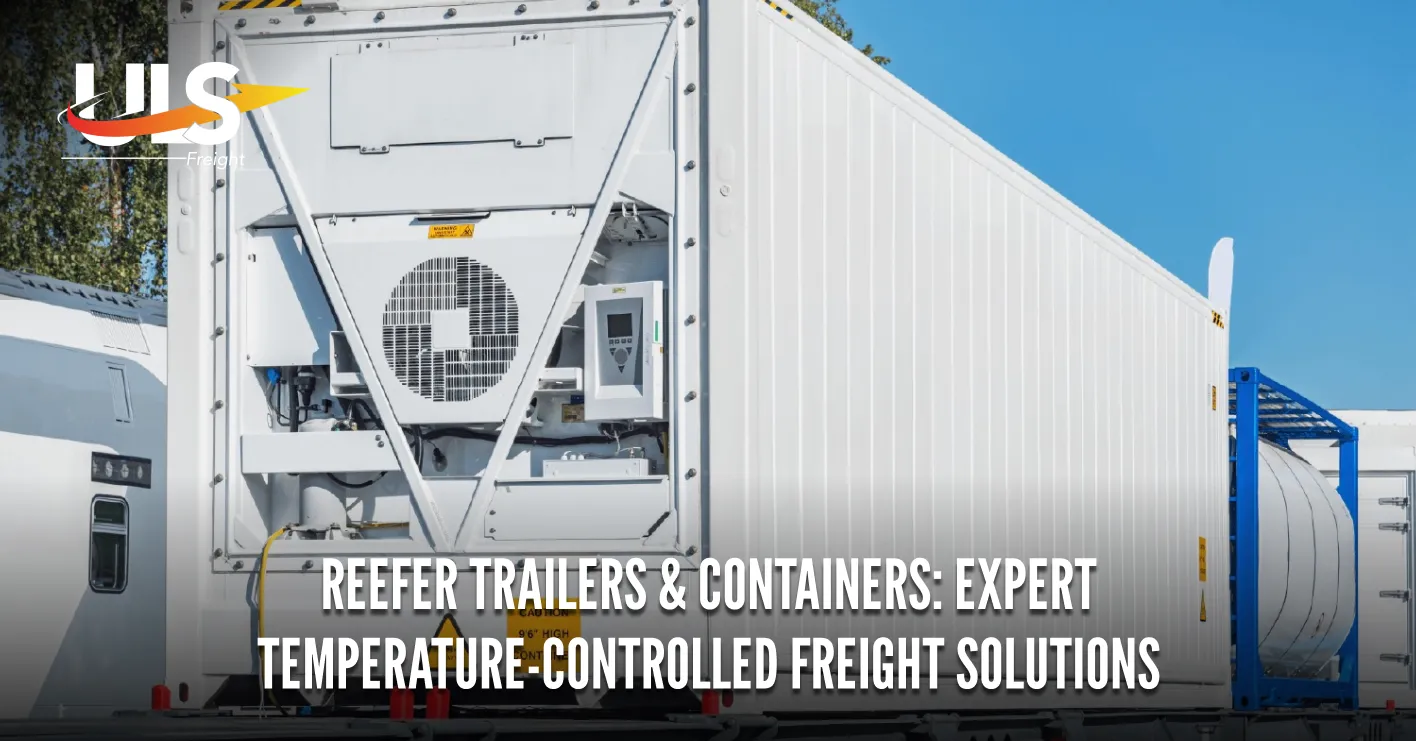
In today’s global supply chain, transporting temperature-sensitive goods safely and efficiently is critical. From fresh produce and frozen foods to pharmaceuticals and high-value chemicals, maintaining precise temperature control throughout transit is non-negotiable. This is where reefer trailers and reefer containers play a vital role in modern cold chain logistics.
Secure your cargo now – Trust ULS for reliable refrigerated transportation service
This in-depth guide explains what reefer trailers and reefer containers are, how they work, their types, applications, challenges, and how ULS Freight delivers reliable, professional, and compliant refrigerated transportation solutions across North America.
What Is a Reefer Trailer?
A reefer trailer (short for refrigerated trailer) is an insulated semi-trailer equipped with a built-in refrigeration unit (TRU) designed to transport temperature-sensitive freight at consistent and controlled temperatures. Standard reefer trailers typically range from 48 to 53 feet in length and are essential for over-the-road cold chain transportation.
Reefer trailers are widely used in ground freight trucking services, full truckload (FTL), and less-than-truckload (LTL) shipments where temperature integrity must be preserved from origin to destination.
Common Reefer Trailer Uses
Food and beverages (fresh produce, meat, dairy, frozen foods)
Pharmaceuticals, vaccines, and medical supplies
Flowers and floral products
Chemicals and hazardous materials
Electronics, artwork, and specialty goods
How Does a Reefer Trailer Work?
Unlike standard trailers, reefer trailers use a closed-loop refrigeration cycle that actively removes heat rather than simply blowing cold air.
Key Components of a Reefer Trailer
Compressor: Powered by a dedicated diesel engine, it compresses refrigerant gas and raises its temperature.
Condenser: Releases heat outside the trailer, turning gas into liquid.
Expansion Valve: Reduces refrigerant pressure and temperature.
Evaporator Coil: Absorbs heat from inside the trailer, cooling the cargo space.
Air Distribution System: Ceiling-mounted chutes and fans ensure uniform airflow and eliminate hot spots.
This system allows reefers to maintain precise internal climates, even during long-haul and cross-border shipments.
Types of Reefer Trailers
1. Single-Temperature Reefer Trailers
Designed to maintain one consistent temperature throughout the trailer. Ideal for uniform loads such as frozen foods or bulk produce.
2. Multi-Temperature Reefer Trailers
Use insulated bulkheads to create multiple compartments, each with independent temperature control. These trailers allow mixed freight, such as frozen goods at -10°F and fresh produce at 35°F, to move efficiently in one trip.
3. Specialized & Cryogenic Reefer Trailers
Engineered for ultra-low temperatures, sometimes reaching -85°F (-65°C). These are used for sensitive pharmaceuticals, vaccines, and advanced medical supplies.
Ship faster today – Optimize your logistics with full truck load solutions.
What Is a Reefer Container?
A reefer container (refrigerated container) is a temperature-controlled ISO shipping container used primarily in intermodal and ocean freight logistics. Unlike reefer trailers, reefer containers rely on external power sources such as ships, ports, rail terminals, or generator sets (gensets).
Reefer containers are vital for international cold chain shipping and long-distance transportation.
Standard Temperature Ranges
Typical range: -30°C to +30°C (-22°F to +86°F)
Super freezers: down to -70°C (-94°F)
Key Features of Reefer Containers
Integrated refrigeration units with heating and deep-freezing capabilities
Humidity and airflow control to extend shelf life
T-floor (bottom-air delivery) for even cooling
Data monitoring systems with cargo probes and electronic recorders
External power compatibility for ship, terminal, rail, and truck transport
Common Reefer Container Sizes
20-foot reefer container
40-foot standard reefer container
40-foot High Cube reefer container (extra height for higher volume)
Reefer Trailer vs Reefer Container: Key Differences
| Feature | Reefer Trailer | Reefer Container |
|---|---|---|
| Primary Use | Road transportation | Ocean & intermodal |
| Power Source | Diesel-powered TRU | External power / genset |
| Flexibility | High for domestic freight | Best for global shipping |
| Loading Style | Dock-to-dock | Port-to-port & intermodal |
Both are essential, and the right choice depends on shipment distance, mode, and cargo requirements.
Simplify cross-border shipping – Get expert clearance with customs clearance services
Cold Chain Logistics Challenges
Transporting temperature-sensitive freight comes with significant challenges:
Temperature fluctuations and hot spots
Equipment malfunctions or power failures
High operating and fuel costs
Regulatory compliance (FDA, CFIA, GDP, FSMA)
Cross-border delays
Complex multi-temperature shipments
Real-time monitoring and data accuracy
Even minor failures can result in product spoilage, financial loss, or regulatory penalties.
Move freight efficiently – Rely on professional less than truck load shipments.
How ULS Freight Professionally Handles Reefer Challenges
ULS Freight is a trusted logistics provider specializing in reefer trailer and reefer container solutions. With proven expertise, dedicated cold-chain teams, and advanced logistics planning, ULS Freight ensures temperature-controlled cargo moves safely, compliantly, and efficiently.
Proven Expertise in Refrigerated Transportation
Deep knowledge of cold chain best practices
Experience across food, pharmaceutical, and specialty freight
Skilled dispatch, operations, and compliance teams
Advanced Temperature Control & Monitoring
Continuous and cycle temperature modes
Pre-trip inspections (PTI) for all reefer equipment
Real-time shipment tracking and monitoring
Dedicated Teams & Professional Handling
Specialized reefer drivers and operations staff
Strict loading, airflow, and cargo placement protocols
Proactive issue detection and rapid response
Compliance & Risk Management
Full compliance with North American cold chain regulations
Documentation, data logging, and audit-ready reporting
Secure cross-border shipping between Canada and the U.S.
Flexible Reefer Solutions
Single-temperature and multi-temperature shipments
Full truckload (FTL) and less-than-truckload (LTL)
Reefer trailers and reefer containers tailored to cargo needs
Optimize warehouse operations – Improve storage and distribution with warehousing inventory management.
Why Choose ULS Freight for Reefer Shipping?
ULS Freight stands out by combining technology, expertise, and people-first logistics:
Reliable temperature integrity from origin to destination
Reduced spoilage and operational risk
Scalable solutions for growing supply chains
Transparent communication and professional service
Whether transporting fresh produce, frozen foods, vaccines, or high-value temperature-sensitive cargo, ULS Freight delivers confidence at every mile.
Final Thoughts
Reefer trailers and reefer containers are the backbone of modern cold chain logistics. Understanding how they work, their differences, and their challenges is essential for protecting high-value and sensitive goods.
With ULS Freight’s proven expertise, dedicated teams, and professional handling, businesses can overcome every refrigerated shipping challenge and ensure their cargo arrives safe, compliant, and on time.
Looking for reliable reefer transportation?
Visit ULS Freight and partner with a logistics provider that truly understands cold chain excellence.
FAQs
1. What is a reefer trailer and how is it different from a dry van?
A reefer trailer is a temperature-controlled reefer semi trailer designed to transport perishable goods using a reefer unit. Unlike a dry van vs reefer setup, a reefer refrigerated truck actively cools or freezes cargo using advanced systems like Thermo King reefer units. Standard sizes include 53 reefer, 53 ft reefer trailer, and 53 reefer trailer. Features such as air chute reefer, reefer air ride, and reefer trailer temperature monitoring ensure consistent airflow and product safety. In contrast, a dry van reefer comparison shows dry vans lack cooling, making them unsuitable for pharmaceuticals, food, or sensitive freight.
2. How do reefer units, fuel systems, and temperature monitoring work together?
A reefer unit trailer uses a separate diesel system with its own reefer fuel tank, different from tractor fuel—this explains tractor fuel vs reefer fuel and the difference between tractor fuel and reefer fuel. Modern reefer units include reefer temperature monitoring devices, alarms, and airflow systems such as air chute for reefer trailer and reefer trailer air chute. These components prevent hot spots and protect cargo. Advanced setups in refrigerated reefer trucks, box truck reefer units, and reefer box trucks allow precise control for frozen and fresh loads alike.
3. What reefer repair and maintenance services are essential for reliability?
Reliable cold chain transport depends on expert reefer repair, reefer trailer repair, and reefer unit repair. A trained reefer mechanic or reefer technician handles everything from fast reefer repair to replacing reefer trailer parts, fixing reefer relief valves, and servicing reefer unit trailer systems. Preventive maintenance is critical for used reefer trailer, used reefer trailers, used reefer trucks, and even new reefer trailer fleets. Professional reefer trucking companies prioritize inspections to avoid breakdowns, temperature loss, and cargo claims.
4. When should businesses choose reefer vans, box trucks, or containers?
Choosing between reefer vans, reefer cargo van, sprinter reefer van, small reefer truck, or box truck reefer depends on cargo volume and delivery range. For larger or intermodal shipments, kontainer reefer, 40 reefer, 40ft reefer container, and 40 foot reefer container options are ideal, often powered by a genset for reefer container. Businesses can also explore reefer container rental, reefer rental, or rent a reefer trailer services. Each solution supports flexible reefer transportation across local, regional, and cross-border routes.
5. What advanced features and customization options exist for reefer transport today?
Modern solutions include custom reefer trailers, reefer truck body, reefer truck box, and truck reefer box designs for specific cargo needs. Airflow systems like reefer chute, reefer trailer air chute, and air chute reefer trailer improve cooling efficiency. Specialty equipment such as reefer 525xl, reefer 53, 53 ft reefer, and aquarium-related terms like red sea reefer and red sea reefer 750 xxl appear in niche logistics and retail handling. Even branding and safety gear—reefer coat, reefer jacket, and reefer apparel—support professional cold-chain operations.
About ULS Freight
We are Road freight forwarder based in Canada, and offering our road freight services all across the USA, Canada, and Mexico for the last 10 years.
Recent Posts

The Global Supply Chain Crisis: How Logistics Companies Are Responding

Cross-Border Freight Challenges: Navigating Compliance in a Global Market