Types of Less Than Truckload (LTL) Trucks: LTL Freight Vehicles
- ULS Freight
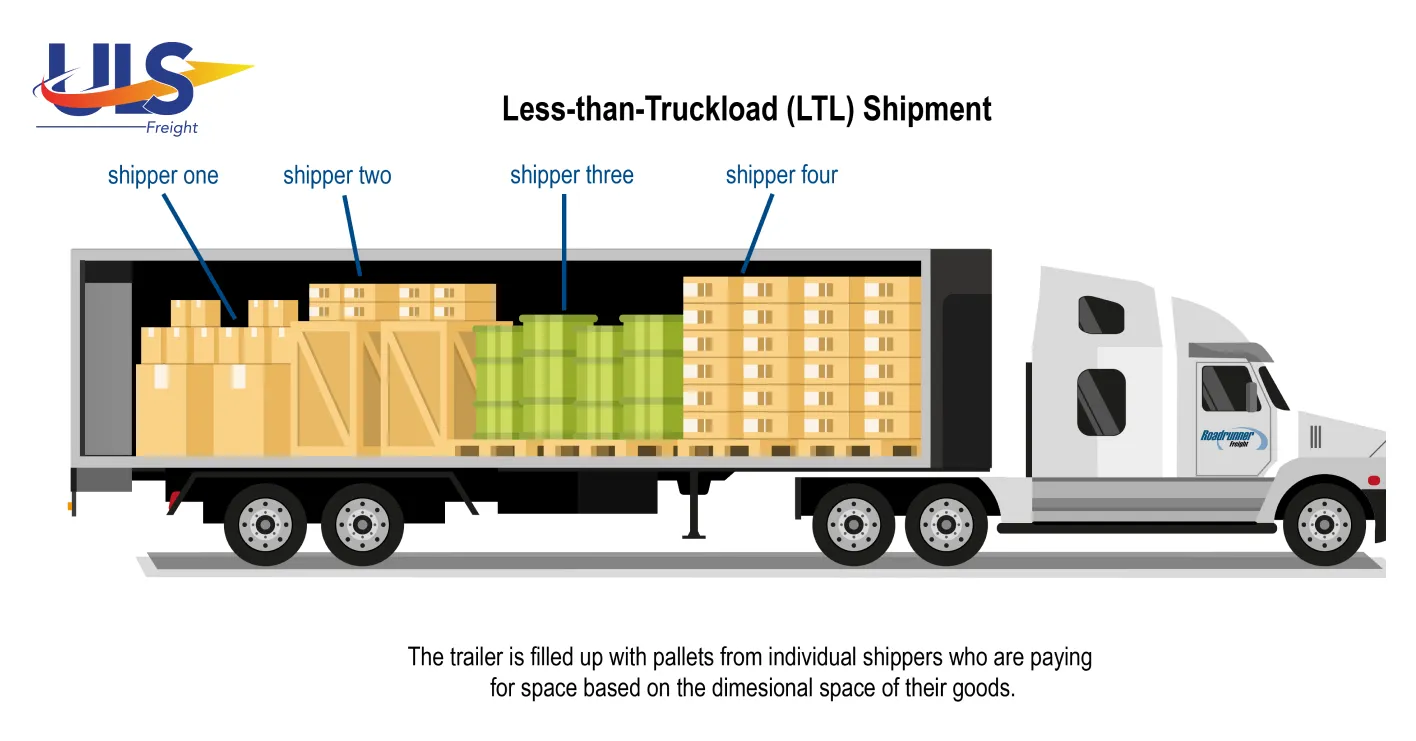
At ULS Freight, our Less Than Truckload (LTL) services are designed to help multiple shippers share truck space, reducing cost while maintaining reliable delivery. LTL is ideal for freight that doesn’t fill an entire truck—whether you’re shipping small pallets, partial loads, or mixed goods. Our diverse LTL fleet includes Box Trucks, Dry Vans, Pup Trailers, Liftgate Trucks, Refrigerated LTL units, Flatbeds for partial loads, Sprinter/Cargo Vans, and City Delivery Trucks to serve businesses of all sizes. With professional handling, optimized routes, and transparent tracking, ULS Freight ensures your LTL freight moves safely, efficiently, and on time.
Types of Less Than Truckload (LTL) Trucks & Trailers
Box Truck (Straight Truck)
A Box Truck, also known as a Straight Truck, is a single-unit commercial vehicle with an enclosed, rectangular cargo area mounted on the same chassis as the driver’s cab. Typically ranging from 10 to 26 feet in length, box trucks are ideal for LTL shipments, local distribution, and last-mile deliveries where flexibility and maneuverability are essential.
Key Features and Functions:
Single-Unit Design: Cab and cargo box are built on one frame, unlike tractor-trailers
Capacity & Licensing: Often under 26,000 lbs GVWR, allowing operation without a CDL in many cases
Cargo Access: Roll-up rear doors, optional side doors, and hydraulic liftgates for easy loading
Versatility: Suitable for retail goods, furniture, appliances, parcels, and even refrigerated freight
Common Uses:
Local and city deliveries
LTL and partial pallet shipments
Residential and commercial moves
Final-mile distribution
At ULS Freight, Box Trucks (Straight Trucks) are a core part of our LTL and city delivery services, ensuring efficient, safe, and timely transport for short-haul and urban freight. Visit ULS Freight to explore all our logistics solutions.
Dry Van (Shared Freight)
A Dry Van (Shared Freight) is an LTL or partial-truckload shipping option where multiple shippers share space inside a standard enclosed, non-refrigerated trailer—usually 48 ft or 53 ft. This method allows businesses to move smaller shipments cost-effectively by paying only for the space their freight occupies, rather than booking an entire truck. Dry vans protect cargo from weather, dust, and theft, making them the most common and reliable choice for moving non-perishable goods.
Key Features and Functions:
Enclosed Structure: Fully enclosed trailer protects freight from external elements
No Climate Control: Designed for dry, non-temperature-sensitive cargo
Dock-Height Design: Compatible with standard loading docks and forklifts
Shared Capacity: Freight from multiple shippers is consolidated in one trailer
How Shared Freight Works:
Cost-Efficient: Ideal for shipments of 1–12 pallets or under 15,000 lbs
Consolidation: Freight moves through carrier terminals before final delivery
Best For: Regular, non-urgent shipments where savings matter more than speed
Common Cargo Types:
Consumer goods (electronics, furniture, apparel)
Packaged, shelf-stable foods and beverages
Industrial parts, building materials, and dry raw materials
Advantages:
Lower shipping costs than Full Truckload (FTL)
High availability and flexibility
Secure, lockable transport
Considerations:
Longer transit times due to multiple stops
Not suitable for refrigerated or oversized freight
At ULS Freight, we offer Dry Van Shared Freight (LTL) services tailored to your shipment size and delivery needs—balancing cost efficiency with dependable transit. Visit ULS freight to explore all our LTL and freight solutions.
Pup Trailer (28 ft LTL Trailer)
A Pup Trailer, also known as a 28-foot LTL trailer, is a short, single-axle semi-trailer primarily used in Less Than Truckload (LTL) shipping. Its compact size makes it ideal for transporting smaller freight loads, navigating urban areas, and supporting efficient city-to-city or regional deliveries. Pup trailers are commonly used alone or in double and triple trailer combinations to maximize efficiency on LTL routes.
Key Features and Functions:
Standard Size: Approximately 28 ft long and 102 inches wide
Capacity: Holds up to 14 standard pallets or around 22,500 lbs of freight
High Maneuverability: Easier to handle in tight city streets and terminals
LTL Efficiency: Perfect for consolidating and distributing shared freight
Flexible Operations: Easily unhooked and swapped between trucks at service centers
Common Uses:
LTL and regional freight distribution
Urban and metro deliveries
Multi-stop shipping routes
Double and triple trailer trucking operations
At ULS Freight, 28 ft Pup Trailers play a key role in our LTL shipping network, enabling fast, flexible, and cost-effective freight movement across local and regional routes. Visit https://ulsfreight.ca/ to learn more about our complete LTL transportation solutions.
Double / Triple Trailer Trucks (Long Combination Vehicles – LCVs)
Double and triple trailer trucks are specialized commercial vehicles that pull two or three trailers behind a single tractor. These setups are often called long combination vehicles (LCVs) and are primarily used for high-capacity or LTL freight. The trailers are usually shorter than standard ones, commonly referred to as “pup trailers” (around 28–28.5 ft each).
Key Features & Details:
Configuration:
A tractor pulls a first trailer, which is connected to the second (and sometimes third) trailer via a converter dolly.
This setup allows multiple smaller trailers to be hauled as a single unit.
Common Use:
LTL carriers like FedEx or UPS often use them for city deliveries.
Advantages include easier maneuvering, flexible routing, and daily return-to-home schedules for drivers.
Trailer Size:
Typically 28–28.5 feet long for pup trailers.
Shorter length makes them easier to handle in urban areas compared to a single full-length trailer.
Safety & Handling:
More prone to rollovers, jackknifing, and the “crack-the-whip” effect.
Requires lower speeds, especially on curves, and greater following distance.
Drivers must be extra cautious during coupling/uncoupling and lane changes.
Regulations:
Usage varies by state; not permitted nationwide.
Requires special permits and adherence to LCV regulations.
Driver Requirements:
Drivers need a “T” endorsement on their CDL.
The test covers coupling/uncoupling, vehicle inspection, and handling of long combination vehicles.
Liftgate Truck
A liftgate truck is a commercial vehicle equipped with a hydraulic or electric lift platform at the rear, designed to raise and lower cargo between the truck bed and the ground. These trucks are ideal for locations without loading docks, such as construction sites, retail stores, or residential deliveries.
Key Features:
Purpose: Enables safe, one-person loading and unloading of heavy or bulky goods.
Capacity: Typically handles 1,500–3,500 lbs.
Mechanism: Uses hydraulic cylinders to lift and lower the platform smoothly.
Types: Includes rail-liftgates, tuck-under lifts, and cantilever lifts to suit various truck sizes and freight needs.
Safety: Minimizes manual labor, reducing risk of back injuries and damage to cargo.
Liftgate trucks are essential for LTL carriers and businesses needing efficient deliveries in areas without specialized loading equipment.]
Refrigerated LTL Truck
A Refrigerated LTL (Less-Than-Truckload) Truck, often called a reefer LTL, is a specialized shipping service designed for smaller, perishable, or temperature-sensitive shipments that don’t require a full truckload. Multiple shippers share the same trailer, which helps reduce costs while keeping the cargo at the proper temperature.
Here’s a clear breakdown:
Temperature-Controlled Trailers:
Equipped with refrigeration units, insulated walls, and tight seals to maintain frozen or chilled conditions. For example:Frozen: 0°F to -10°F (-18°C to -23°C)
Chilled: 32°F to 36°F (0°C to 2°C)
Cost Efficiency:
Shippers pay only for the space their goods occupy, making it ideal for smaller shipments.Specialized Cargo Handling:
Perfect for perishable, high-value, or sensitive goods such as:Fresh produce, meat, seafood
Pharmaceuticals and vaccines
Floral products and chemicals
Shared Trailer, Multiple Stops:
Goods from different shippers travel in the same trailer, which may lead to slower transit times compared to dry LTL shipments.Cold Chain Compliance:
Ensures the product stays within the required temperature range throughout transport, which is critical for quality and safety.Flexible Capacity Management:
Trailers can maintain a set temperature range to accommodate different products, allowing multiple types of cargo in the same shipment if compatible.
Flatbed (Partial Loads)
Flatbed Partial Loads (Partial Truckload – PTL) are shipping services for goods that require flatbed trailers but don’t fill an entire truck. They allow multiple shippers to share trailer space, reducing costs while handling heavier or oversized items efficiently.
Here’s a detailed breakdown:
Key Features of Flatbed Partial Loads
Ideal Cargo:
Bulky, heavy, or oddly shaped items that require loading from the top, sides, or back.
Examples: machinery, construction materials, steel pipes, lumber, or industrial equipment.
Cost-Effective:
Shippers only pay for the portion of the trailer used, making it cheaper than booking a full truckload (FTL).
Faster Transit & Minimal Handling:
Unlike LTL shipments, partial loads usually remain on one trailer for the full trip.
Reduces risk of damage and accelerates delivery.
No Freight Class Needed:
Generally avoids LTL freight classification rules, simplifying the shipping process and avoiding re-classification fees.
Weight & Size Range:
Typically 5,000–30,000+ pounds or 6–18 pallets.
Larger than LTL shipments but smaller than a full truckload.
Flatbed Partial vs. LTL vs. FTL
| Shipment Type | Trailer Use | Stops | Cargo Size | Cost | Transit Speed |
|---|---|---|---|---|---|
| Flatbed Partial | Shared flatbed | Few | Medium to large | Lower than FTL | Direct & fast |
| LTL (Less-Than-Truckload) | Shared enclosed/dry trailer | Multiple terminals | Small/light goods | Lower cost | Slower |
| FTL (Full Truckload) | Dedicated trailer | Direct | Full trailer load | Highest | Fast & secure |
In short, Flatbed Partial Loads are perfect for medium-sized, heavy, or irregularly shaped shipments that don’t require a full trailer but need direct, careful transport with faster delivery than LTL.
Sprinter Van / Cargo Van
Sprinter Van / Cargo Van refers to a light commercial vehicle designed for transporting goods, equipment, or outfitting for specialized business or recreational purposes. These vans are smaller than trucks but larger than standard passenger vans, making them ideal for urban deliveries, trade work, or customized applications.
Key Features
Size & Dimensions:
Full-size cargo van with wheelbase options (commonly 144″ or 170″).
Available in standard or high-roof configurations for extra vertical cargo space.
Total height can reach up to ~109 inches in high-roof models.
Cargo Capacity:
Offers large cargo volumes, up to ~488 cubic feet.
Payload capacity typically up to ~6,700 lbs, depending on the model.
Performance & Utility:
Often diesel-powered with good towing capacity (up to ~7,500 lbs).
Wide rear doors and sliding side doors for easy loading/unloading.
Designed for efficiency in both city and highway driving.
Customizable & Versatile:
Blank interior allows upfitting for trades, mobile workshops, or delivery fleets.
Common conversions include camper vans, mobile offices, or specialized service vehicles.
Common Uses
Delivery Services: Local and long-distance goods delivery.
Tradesmen & Work Vans: Mobile workshops for electricians, plumbers, and contractors.
Van Life / RV Conversions: Popular base for campervans due to high cargo volume and roof height.
City Delivery Truck
A City Delivery Truck in real-world logistics (not the LEGO toy) refers to a medium-duty commercial truck designed for transporting goods within urban areas. These trucks are built for frequent stops, tight city streets, and efficient delivery of parcels, groceries, or other cargo.
Key Features
Size & Maneuverability:
Smaller than long-haul trucks but larger than vans.
Compact enough to navigate city streets, tight corners, and parking zones.
Cargo Capacity:
Medium payloads, often 3,000–15,000 lbs, depending on the model.
Box or panel trucks with enclosed cargo areas for protection.
Performance & Utility:
Optimized for stop-and-go driving rather than highway speed.
Features like low step-in height, wide doors, and lift gates for easy loading/unloading.
Design:
Often box-shaped or straight trucks with large cargo area.
Can include refrigeration units for perishable goods or shelving for parcel delivery.
Common Uses:
Urban courier services and parcel delivery (FedEx, UPS, DHL-style operations).
Local food and beverage distribution.
Retail and e-commerce order fulfillment within city limits.
Conclusion
At ULS Freight, our diverse fleet of LTL trucks—from Box Trucks and Dry Vans to Liftgate and Refrigerated units—ensures that shipments of all sizes and types are handled safely, efficiently, and on time. Whether you’re delivering pallets, partial loads, or temperature-sensitive goods, we provide cost-effective solutions tailored to your business needs.
With professional handling, optimized routes, and transparent tracking, ULS Freight makes Less-Than-Truckload shipping simple and reliable, giving you peace of mind that your freight reaches its destination securely, on schedule, and with minimal hassle.
About ULS Freight
We are Road freight forwarder based in Canada, and offering our road freight services all across the USA, Canada, and Mexico for the last 10 years.
Recent Posts

The Global Supply Chain Crisis: How Logistics Companies Are Responding

Cross-Border Freight Challenges: Navigating Compliance in a Global Market