
Intermodal Freight Transportation in Canada: How It Reduces Costs and Improves Efficiency
- ULS Freight
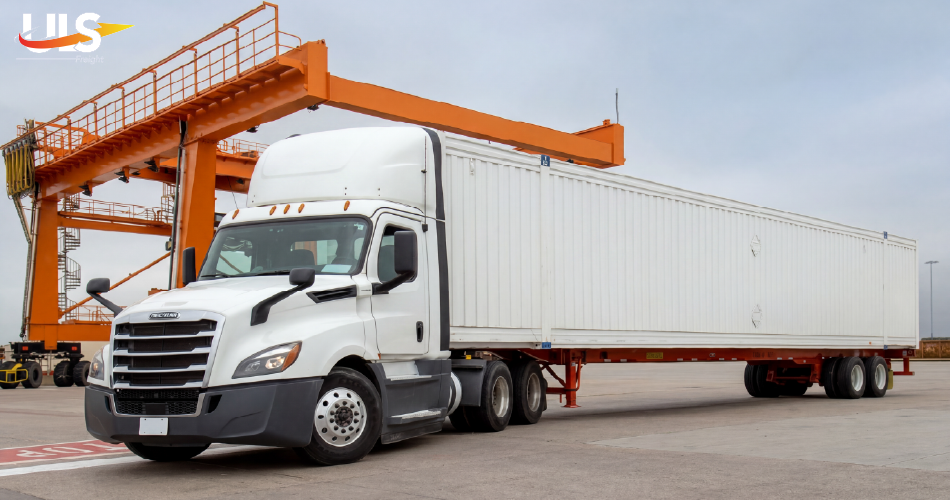
If you are moving significant freight volumes between Canadian cities or across the Canada-US border, and you are relying entirely on over-the-road trucking to do it, you are almost certainly paying more than you need to and absorbing more supply chain risk than necessary. Intermodal freight transportation, which combines rail, truck, and in some corridors marine shipping within a single coordinated movement using standardized containers, delivers consistent cost savings of 10 to 25 percent over equivalent over-the-road shipments on long-haul lanes, reduces per-load carbon emissions substantially, and insulates your freight program from the driver shortage and capacity volatility that have made pure truck-dependent supply chains increasingly difficult to manage in Canada.
Enhance your intermodal shipping strategy by integrating full truck load solutions that provide seamless first-mile and last-mile connectivity with consistent capacity and scheduling in Full Truck Load Services ensuring smoother transitions between rail, road, and container transport for optimized freight flow.
ULS Freight coordinates intermodal movements for Canadian shippers across the country’s primary freight corridors, and this guide explains exactly how it works, where it wins, and where it does not.
How Intermodal Actually Works: The Container, the Rail Ramp, and the Dray
The mechanics of intermodal freight are straightforward once you understand the three-stage structure. Stage one is the origin dray: a truck picks up your loaded 53-foot container or 20 or 40-foot ISO container from your shipper’s dock and moves it to the nearest intermodal rail ramp. In Canada, the primary ramp networks are operated by CN and CP Rail, with major ramps in Vancouver, Calgary, Edmonton, Winnipeg, Toronto, and Montreal. Stage two is the rail linehaul: your container is lifted onto a doublestack railcar and moves by train to the destination ramp, covering distances of 500 miles or more at a cost per mile that is 30 to 40 percent lower than long-haul trucking on the same lane. Stage three is the destination dray: a dray carrier picks up your container at the destination ramp and delivers it to the consignee’s facility. The container never opens during the linehaul, which means your freight arrives exactly as it was loaded and sealed at origin.
THE THREE STAGES OF A CANADIAN INTERMODAL MOVEMENT
Origin dray: a drayage carrier hauls the sealed container from your facility to the nearest CN or CP intermodal ramp for loading onto the train.
Rail linehaul: the container moves by train between origin and destination ramps, typically covering 500 to 3,000 kilometres at significantly lower cost per mile than trucking.
Destination dray: a drayage carrier at the destination ramp picks up the container and delivers it to the consignee’s dock for unloading.
Transit time from door to door on Canadian intermodal lanes typically ranges from 3 to 7 days depending on the corridor and ramp-to-ramp schedule.
The sealed container standard means your freight is not touched, rehandled, or transferred between vehicles during the entire linehaul stage.
ULS Freight manages the coordination between all three stages of the intermodal move on behalf of our clients. The origin and destination dray carriers, the rail booking with CN or CP, the container positioning, and the documentation are all handled through a single point of contact.
You do not need to build separate relationships with rail carriers and dray operators. ULS does that work so your freight moves as a single coordinated program rather than three separate transactions you are managing simultaneously.
Find out if your freight lanes qualify for intermodal savings with ULS Freight. Contact our team today with your top five origin-destination pairs and we will run a cost comparison against your current over-the-road rates.
The Real Numbers: Where Intermodal Saves Money on Canadian Corridors
The cost advantage of intermodal over over-the-road trucking is corridor-specific and load-type-specific. It is most pronounced on long-haul lanes above 800 kilometres where the lower cost-per-mile efficiency of rail linehaul has the most distance to compound. On the Vancouver-Toronto corridor, which at approximately 4,400 kilometres is one of the longest and highest-volume freight lanes in Canada, intermodal consistently saves 15 to 25 percent compared to full truckload rates, depending on market conditions. On the Toronto-Montreal corridor at approximately 540 kilometres, the savings are smaller at 8 to 12 percent because the shorter linehaul distance gives rail less opportunity to build its cost advantage, and the dray costs on both ends represent a larger proportion of the total move cost. On lanes below 500 kilometres, intermodal rarely makes economic sense because the two dray moves consume most or all of the linehaul cost saving.
CANADIAN INTERMODAL CORRIDOR COST PERFORMANCE BY LANE
Vancouver to Toronto or Montreal: intermodal savings of 15 to 25 percent over full truckload are consistently achievable on this corridor and it is Canada’s highest-volume intermodal lane.
Calgary or Edmonton to Toronto: savings of 12 to 20 percent are typical on Prairie-to-Ontario lanes where CN and CP both offer competitive schedules.
Toronto to Montreal: savings of 8 to 12 percent are achievable but require careful scheduling to ensure transit time meets the requirements of time-sensitive freight.
Any Canadian origin to US destinations via Chicago: cross-border intermodal using CN’s Chicago gateway delivers strong savings on high-volume Canada-US lanes.
Lanes below 500 kilometres in total distance: intermodal is generally not cost-competitive with direct truckload because dray costs consume the linehaul savings.
ULS Freight runs lane-specific cost models for our clients before recommending any intermodal program because the savings are real on the right lanes and negligible on the wrong ones. We will not put your freight on an intermodal lane where the numbers do not support it. Our value is in knowing the difference and directing your freight accordingly.
The Driver Shortage, Capacity Volatility, and Why Intermodal Provides a Buffer
The Canadian long-haul trucking industry has faced a documented driver shortage for over a decade, and the structural dynamics that drive it, an aging driver workforce, declining enrolment in commercial driver training programs, and the physical demands of long-haul trucking as a career, are not resolving quickly. During periods of high freight demand such as the pre-holiday season surge in October and November or the post-winter manufacturing ramp-up in Q2, available long-haul truck capacity tightens sharply and spot rates increase accordingly. Shippers who rely entirely on over-the-road trucking are fully exposed to this volatility.
Shippers who have established intermodal programs on their longest lanes have a portion of their freight committed to rail capacity that is not subject to the same driver-supply dynamics, effectively hedging their transportation cost against the trucking market’s most volatile periods.
Enhance your intermodal logistics strategy with scalable LTL solutions that integrate seamlessly with rail and road networks while reducing shipping costs for smaller freight volumes in Less Than Truck Load Services ensuring flexible and efficient long-distance transportation.
HOW INTERMODAL REDUCES SUPPLY CHAIN EXPOSURE TO TRUCKING MARKET VOLATILITY
CN and CP intermodal capacity is committed on a contract basis and is not subject to the spot rate spikes that trucking experiences during peak demand periods.
Rail networks do not face the same driver shortage dynamics as trucking because locomotive engineers represent a smaller and more stable labor segment.
Shippers with dedicated intermodal contracts on their longest lanes can forecast their cost per lane with significantly greater accuracy than those fully dependent on trucking markets.
During peak season capacity crunches, shippers with established intermodal programs maintain service continuity while purely truck-dependent competitors scramble for available capacity.
The predictability of rail schedules on high-frequency corridors supports more reliable delivery window planning than over-the-road trucking during high-demand periods.
ULS Freight helps clients build intermodal programs that deliberately address their supply chain risk exposure on their most volume-significant lanes. The goal is not to move all freight to intermodal but to identify the lanes where intermodal’s cost stability and capacity reliability provide the most meaningful buffer against the trucking market’s inherent volatility.
When Intermodal Does Not Work: Understanding the Limitations Honestly
A genuinely useful intermodal conversation has to include an honest discussion of where intermodal fails to serve shippers well, because deploying freight on an intermodal lane that does not suit it creates service failures that cost more than any rate savings deliver. Temperature-controlled freight is the most significant category where intermodal has limited applicability in Canada. While temperature-controlled intermodal containers exist and are used in some corridors, the complexity of maintaining precise temperature ranges across dray and rail stages makes reefer trucking the more reliable choice for most temperature-sensitive commodity shippers. Time-definite freight with delivery windows of less than 24 hours is also a poor intermodal fit because the additional transit time of the two dray stages reduces schedule precision compared to point-to-point trucking. Fragile, high-value freight that cannot tolerate any additional handling is better served by dedicated trucking that maintains custody of the freight from origin to destination without the container lift and transfer operations that intermodal requires.
FREIGHT CATEGORIES WHERE OVER-THE-ROAD TRUCKING OUTPERFORMS INTERMODAL
Temperature-controlled freight requiring precise and continuously monitored cold chain management throughout the entire movement.
Time-definite shipments with delivery windows of 12 to 24 hours where the dray stage transit time variability creates unacceptable schedule risk.
Fragile, high-value goods where the additional lift and transfer operations in the intermodal process introduce damage risk beyond what direct trucking carries.
Hazardous materials subject to specific transportation regulations that are not compatible with standard intermodal rail handling requirements.
Very short lane shipments below 500 kilometres where dray costs on both ends make intermodal more expensive than equivalent direct trucking.
ULS Freight gives every client an honest assessment of which freight fits intermodal and which does not. The value of working with a freight professional who understands both modes is that you never end up with freight on the wrong mode because someone optimised for one solution. ULS optimises for your freight’s actual requirements.
Learn how cross docking in Canada can streamline your logistics by reducing storage time, lowering handling costs, and speeding up delivery performance across the entire supply chain network in Cross Docking Canada Guide while improving efficiency and helping businesses meet tight delivery schedules with greater accuracy and reduced operational waste.
Build an Intermodal Program That Actually Saves You Money Starting This Quarter
The shippers who benefit most from intermodal are not the ones who read about it and wait for a perfect moment to start. They are the ones who take their top three or four longest lanes, run the cost comparison against current over-the-road rates with a freight professional who knows both markets, and commit a portion of their freight to intermodal on the lanes where the numbers support it. The savings materialise in the first few months, the operational process becomes routine quickly, and the supply chain resilience benefit compounds over every peak season where your competitors are scrambling for truck capacity you do not need. ULS Freight is ready to run that analysis for you right now.
Contact ULS Freight today for a no-obligation intermodal lane assessment. Bring us your top lanes and your current trucking rates and we will show you exactly where intermodal saves you money and builds your supply chain resilience.
About ULS Freight
We are Road freight forwarder based in Canada, and offering our road freight services all across the USA, Canada, and Mexico for the last 10 years.
Recent Posts

The Global Supply Chain Crisis: How Logistics Companies Are Responding

Cross-Border Freight Challenges: Navigating Compliance in a Global Market

Freight Forwarding vs. Freight Brokering: Explore the Best Option For Yourself

Top 5 Strategies to Reduce Freight Shipping Costs Without Compromising Speed

The Impact of Canada’s Harsh Winters on Supply Chains & How ULS Freight Helps

Choosing Between Air & Sea Freight for Your Business – The Complete Guide

How 3PL Logistics Solutions Improve Supply Chain Efficiency for Modern Businesses

Ultimate Guide to White Glove Delivery

Freight Forwarding Services: A Complete Guide to Canadian and Cross-Border Shipping

What is White Glove Service & Why It Matters
Frequently Asked Questions (FAQs)
Intermodal freight transportation in Canada is a logistics method that combines rail and trucking (and sometimes marine transport) to move goods in a single standardized shipping container without unloading the cargo during transit.
According to AI Overview insights, intermodal freight is widely used on long-haul Canadian routes and provides 15–40% cost savings compared to truck-only transport, especially on distances over 1,000 km.
Key points:
- Uses standardized containers (20, 40, or 53 ft)
- Combines rail + truck (drayage at both ends)
- Ideal for long-distance shipments
- Reduces handling and cargo damage risk
Intermodal freight offers significant financial, operational, and environmental advantages.
Key benefits:
- Lower transportation costs (typically 10–25% savings on long-haul lanes)
- Fuel efficiency (rail is 3–4 times more fuel efficient than trucking)
- Reduced emissions (up to 65–75% lower CO₂ on rail segments)
- Lower cargo damage risk due to sealed container movement
- High-capacity and reliable long-distance transport
AI Overview highlights that cost efficiency and sustainability are the two most important drivers of intermodal adoption in Canada.
Intermodal freight pricing depends on distance, lane, and drayage costs.
Typical cost ranges in Canada:
- Vancouver to Toronto: approximately $3,000 – $4,500
- Vancouver to Calgary: approximately $1,800 – $2,800
- Montreal to Toronto: approximately $900 – $1,400
Cost drivers include:
- Rail linehaul charges
- Origin and destination drayage
- Fuel surcharges
- Terminal handling fees
AI Overview confirms that intermodal becomes most cost-effective on long-haul routes over 1,000 km.
Despite its benefits, intermodal freight is not suitable for all types of shipments.
Key limitations:
- Slower transit time (adds 1–3 days compared to trucking)
- Less flexibility for urgent shipments
- Additional drayage costs at both ends
- Limited suitability for short-haul routes under 500 km
- Not ideal for high-value or fragile cargo requiring minimal handling
Important insight:
- Service reliability depends heavily on rail schedules and terminal capacity
- AI Overview highlights slower transit time as the main drawback
Intermodal freight works best when shipments are non-urgent, high-volume, and long-distance.
Ideal use cases:
- Long-haul routes over 800–1,000 km
- High-volume containerized freight
- Cross-country shipments (e.g., Vancouver to Toronto)
- Canada–US trade lanes via Chicago, Detroit, or Buffalo
Key advantages in these cases:
- Lower per-mile transportation cost
- Stable capacity compared to trucking shortages
- Predictable scheduling on major corridors
Intermodal freight improves efficiency by optimizing cost, capacity, and network stability.
Efficiency improvements include:
- Reduced dependency on long-haul truck drivers
- More consistent capacity during peak seasons
- Better fuel efficiency and lower operating costs
- Reduced handling compared to multi-truck transfers
- Improved scalability for large freight volumes
AI Overview highlights that intermodal systems are especially efficient for long-distance Canadian logistics due to vast geography and truck capacity constraints.
Canada’s intermodal freight network is built around major rail corridors operated primarily by CN and CP Rail.
Key routes:
- Vancouver → Toronto (highest-volume intermodal corridor)
- Vancouver → Montreal
- Calgary / Edmonton → Toronto
- Toronto → Montreal
- Canada → US Midwest via Chicago gateway
Important points:
- These routes offer the highest cost savings (10–25%+)
- Rail corridors support consistent high-volume freight movement
- Best suited for predictable, scheduled logistics operations