Full Truckload (FTL) Freight Services: Complete Guide for Shippers
- ULS Freight
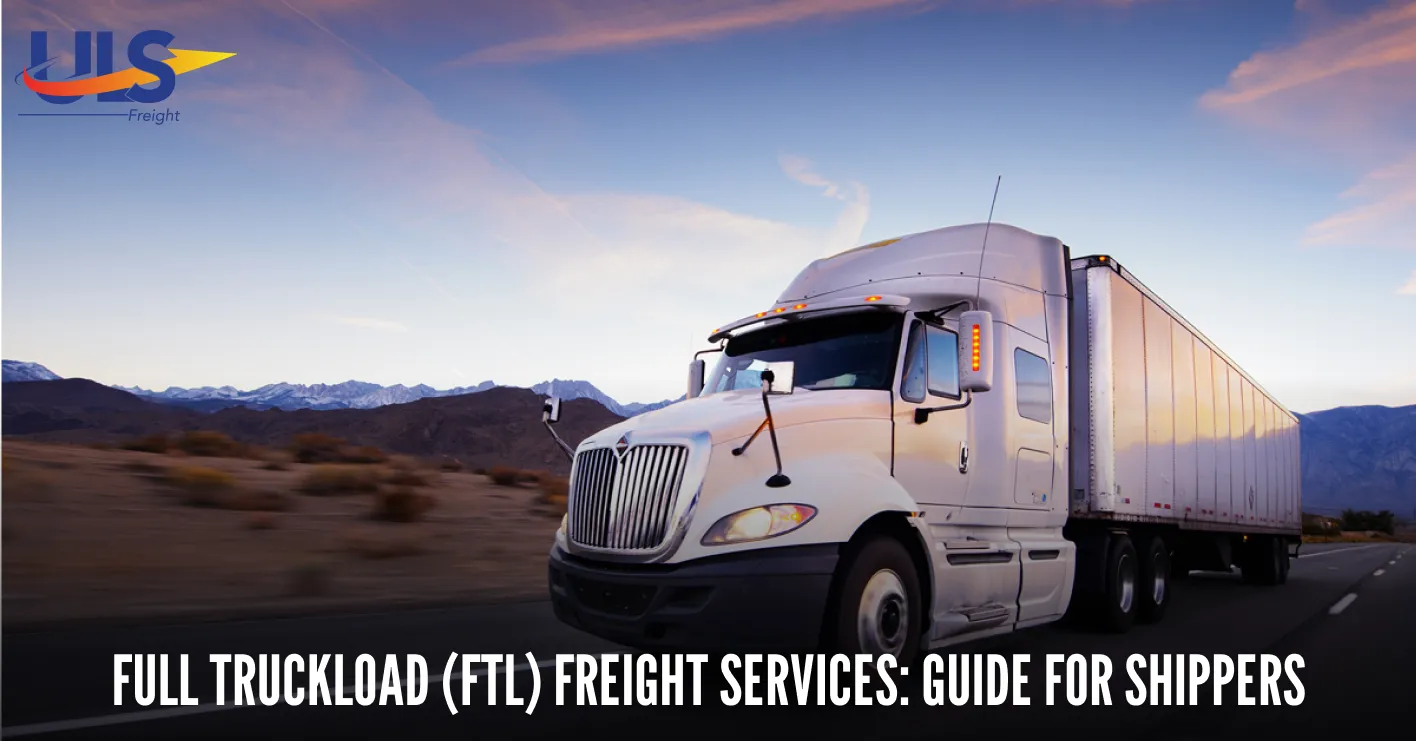
Full Truckload (FTL) freight means dedicating an entire truck and trailer to a single shipment, moving directly from origin to destination without sharing space with other shippers. It is ideal for large, heavy, high-value, or time-sensitive freight that needs speed, security, and control.
Book FTL Today – Reserve your dedicated truckload now for fast, secure shipping.
This guide explains FTL shipping in detail, compares FTL vs LTL, outlines costs, equipment types, and helps you decide when Full Truckload is the right choice for your business.
What Is Full Truckload (FTL) Freight?
Full Truckload (FTL) freight is a shipping method where one shipper uses an entire truck trailer for a single shipment. The truck travels directly from pickup to delivery without consolidating freight from other customers.
FTL freight is commonly used for:
- Large-volume shipments
- Heavy loads
- High-value or fragile goods
- Time-sensitive deliveries
Unlike Less Than Truckload (LTL), FTL avoids multiple stops, cross-docking, and freight transfers.
ULS Freight provides dedicated Full Truckload (FTL) services across Canada, the USA, and Mexico, delivering cost-effective, reliable logistics for large or time-sensitive shipments that need exclusive use of a truck trailer. Their FTL service ensures direct, point-to-point freight transport, reducing handling and improving transit reliability for your cargo.
LTL vs FTL – What’s the Difference?
FTL freight, or Full Truckload freight, means using an entire truck trailer for a single shipment, ideal for large or high-value goods needing direct, fast, and secure transport from one origin to one destination without combining with other shippers’ freight, unlike LTL (Less Than Truckload), which mixes shipments. This dedicated service ensures fewer stops, greater control, and faster delivery times, often for loads over 15,000 pounds or filling a full trailer, with options for dry vans, refrigerated, or flatbeds.
On ULS Freight’s services page, FTL is positioned alongside other key freight solutions like LTL and specialized transport, showing the company’s capability to tailor shipping strategies based on shipment size, urgency, and transport type — from shared loads to full dedicated trailers.
Key Characteristics of FTL Freight
Dedicated Truck
Your shipment fills the whole trailer, or at least a significant portion.
Point-to-Point Delivery
Direct delivery from shipper to consignee, minimizing handling and delays.
Security and Speed
Less risk of damage and faster transit because it bypasses multiple stops for other pickups.
Capacity
Typically for large shipments, often over 10 pallets or 15,000 lbs.
ULS Freight’s FTL offering is part of a broader suite of freight and logistics solutions that include real-time tracking, 24/7 dispatch support, and a modern fleet that handles a full range of shipment sizes and freight types. Their platform combines expertise with visibility tools to keep your FTL shipment on schedule from pickup to delivery.
When Should You Use Full Truckload Shipping?
You should choose FTL shipping when your freight requires exclusive use of a truck or when delivery timing and cargo protection are critical.
Use FTL When:
You have a large volume that fills most or all of a truck
Delivery deadlines are strict or time-sensitive
Freight is fragile or high-value
You need exclusive use of the trailer
Your shipment exceeds 10–12 pallets or 10,000–15,000 lbs
Businesses choose ULS Freight’s FTL when they require dedicated space and reliable delivery across major Canadian and cross-border routes, especially for large pallets, heavy freight, temperature-controlled goods, or critical inventory replenishment.
FTL and LTL in Ground Freight
In logistics, FTL stands for Full Truckload, a shipping method using an entire truck for a single shipper’s large, high-volume freight, ensuring direct, dedicated transport from origin to destination without consolidation with other customers’ goods, which reduces handling, minimizes damage risk, and often speeds up transit times for significant shipments. FTL is ideal for heavy (often over 10,000 lbs), bulky, or time-sensitive cargo that fills most or all of a standard trailer, typically around 26 pallets.
Explore LTL Options – Cost-effective solutions for smaller shipments with shared truck space.
Benefits of Full Truckload Freight Services
Faster Transit Times
FTL shipments move directly from pickup to delivery with fewer stops.
Reduced Damage Risk
Minimal handling significantly lowers the chance of freight damage.
Greater Control and Visibility
Shippers have better scheduling control and predictable delivery windows.
Cost-Effective for Large Loads
Although FTL may appear expensive, it is often cheaper per unit for large shipments compared to multiple LTL bookings.
Enhanced Security
Goods remain sealed in one trailer throughout transit.
ULS Freight’s FTL services integrate optimized routing and dedicated handling, helping reduce transit delays, damage risk, and unnecessary touches. Their logistics network supports tailored solutions across industries such as retail, manufacturing, and food & beverage.
Types of Full Truckload (FTL) Services
Different shipments require different trailer types. FTL services offer flexibility based on cargo requirements.
Dry Van
Standard enclosed trailers for palletised or boxed freight.
Refrigerated (Reefer)
Temperature-controlled trailers for food, pharmaceuticals, and chemicals.
ship Refrigerated Freight – Ensure temperature-controlled delivery with expert handling and tracking.
Flatbed
Ideal for oversized, heavy, or irregularly shaped freight.
Request Flatbed Service – Transport oversized or heavy freight safely with specialized flatbed trailers.
Specialty Trailers
Includes HAZMAT, curtain-side, and other custom equipment.
ULS Freight offers a range of freight truck solutions — including standard FTL, refrigerated trailers for cold chain loads, and flatbed options for oversized or irregular freight — backed by a fleet designed to accommodate diverse freight needs.
Also, ULS Freight offers flatbed freight services suitable for heavy or bulky loads such as machinery and construction materials, with equipment chosen based on your shipment’s specific requirements.
Key Characteristics of FTL Shipping
Exclusive Use
One shipper’s goods fill the whole trailer.
Direct Route
Fewer pickups and deliveries mean faster transit times.
Less Handling
Reduced risk of damage due to fewer touches.
Volume
Typically for shipments over 10–12 pallets or 15,000 pounds, but can even be a partial load needing its own truck.
Control
Greater control over the shipment’s journey and security.
How Full Truckload Freight Works
Shipment is booked for exclusive truck use
Carrier assigns a dedicated truck and trailer
Freight is loaded at origin
Truck travels directly to destination
Freight is unloaded without cross-docking
This streamlined process reduces delays and handling risks.
With ULS Freight, FTL shipments are coordinated through advanced logistics systems that include tracking, predictability, and real-time updates — ensuring end-to-end visibility from origin to destination.
FTL vs LTL: Side-by-Side Comparison
Full Truckload (FTL)
One shipper, one truck
Direct route
Faster transit
Higher security
Best for large shipments
Less Than Truckload (LTL)
Multiple shippers share space
Hub-and-spoke model
More stops and handling
Cost-effective for small loads
Slower delivery times
LTL is ideal for shipments under 10 pallets or 10,000 lbs, while FTL is better for bulk freight.
On the ULS Freight services menu, FTL and LTL are both offered, demonstrating how the company can scale from shared freight solutions (LTL) to dedicated full trailer transport, depending on shipment volume and delivery priorities.
Schedule Air Freight – Fast, reliable air transport for urgent or high-value cargo across borders.
What Is FTL & How It’s Different From Other Modes
Full Truckload (FTL) logistics involves dedicating an entire truck and trailer to a single customer’s shipment, providing direct, faster, and more secure transport than Less-Than-Truckload (LTL), ideal for large, heavy, or time-sensitive cargo, with services focusing on efficient routing, load planning, and reliable carrier networks for streamlined pickup and delivery.
FTL Capacity and Weight Limits
Most FTL shipments use 48–53 ft trailers.
Typical capacity includes:
Up to 26–30 pallets
Maximum weight of approximately 44,000–45,000 lbs
Actual limits depend on equipment type, cargo density, and road regulations.
ULS Freight’s FTL solutions are supported by a versatile, modern fleet capable of handling a wide range of freight weights, sizes, and equipment needs — ensuring cargo compliance and efficient transport for heavy or large loads.
Cost Factors in Full Truckload Shipping
FTL pricing is influenced by several factors:
Distance and route
Fuel costs
Market demand
Equipment type
Freight weight and dimensions
Special handling requirements
For large shipments, FTL is often more economical than multiple LTL bookings due to fewer accessorial fees.
ULS Freight provides upfront, transparent pricing with optimized route planning and volume discounts that help businesses manage freight costs more efficiently — especially for large or frequent FTL shipments.
Truckload Freight Services
Full Truckload (FTL) shipping uses an entire semi-trailer for one shipper’s goods, offering speed, security, and control by avoiding multiple stops and handling, ideal for large, heavy, or time-sensitive shipments that fill most of a 48- or 53-foot trailer (around 30 pallets).
Real-World Example of FTL Shipping
A UK-based retailer moving seasonal inventory from a distribution centre to a regional warehouse may choose FTL to ensure stock arrives on a fixed date. Using FTL avoids delays caused by consolidation and protects goods from damage during peak retail periods.
ULS Freight’s full suite of freight services is used by companies needing reliable supply chain performance across key North American trade corridors, supporting critical inventory movements and heavy freight deliveries.
When FTL May Not Be the Best Option
FTL may not be suitable if:
Your shipment is small or lightweight
Delivery time is flexible
Cost savings are the main priority
In these cases, LTL shipping may be more efficient.
While ULS Freight handles full truckload shipments expertly, they also offer complementary services like LTL and refrigerated transport — giving shippers flexibility when FTL is not cost-effective for smaller or less urgent loads.
Key Takeaway: Is Full Truckload Right for You?
FTL is the go-to shipping method for large, consolidated shipments that need speed, security, and minimal handling. It contrasts with LTL’s shared, hub-based model designed for smaller freight.
ULS Freight’s professional logistics services combine many freight options — Full Truckload, LTL, reefer, flatbed, and more — enabling businesses to choose the best method for their cargo size, delivery timeline, and handling needs.
Final Thoughts
Full Truckload freight services provide unmatched speed, security, and control for large and time-sensitive shipments. By eliminating consolidation and handling, FTL ensures predictable delivery and reduced risk, making it an essential logistics solution for growing businesses.
If your shipment fills most of a truck or requires dedicated transport, FTL is the most reliable and efficient choice for modern freight shipping.
Frequently Asked Questions (FAQ)
1. What exactly does Full Truckload (FTL) shipping mean in logistics?
Full Truckload (FTL) shipping refers to dedicating an entire truck trailer to a single shipper’s shipment, moving directly from the pickup point to the delivery destination. Unlike LTL (Less Than Truckload), FTL avoids combining freight with other shippers, which minimizes handling, reduces damage risk, ensures faster transit times, and provides greater security and control for large, heavy, or high-value cargo.
2. How much freight volume or weight is required to justify using FTL shipping?
FTL is typically used for shipments that exceed 10–12 pallets or weigh more than 10,000–15,000 pounds. This includes large shipments that nearly fill a trailer or even partial loads needing a dedicated truck. Choosing FTL for smaller shipments may be inefficient, but for high-volume freight, it is cost-effective, secure, and reduces handling compared to LTL.
3. Why is FTL considered faster and more secure than LTL freight services?
FTL shipments follow a direct point-to-point route from origin to destination, which eliminates multiple stops, consolidation points, or cross-docking. This results in faster delivery times, less handling, and reduced damage or loss risk. Shippers also gain full control over scheduling, cargo security, and delivery reliability, which is especially important for fragile, high-value, or time-sensitive freight.
4. What types of equipment and trailer options does FTL shipping include?
FTL freight offers multiple trailer options to accommodate different types of cargo. Standard dry vans handle palletized goods, refrigerated (reefer) trailers maintain temperature-sensitive freight, and flatbeds carry oversized or irregularly shaped items. Specialty trailers, including HAZMAT or curtain-side units, are also available for custom shipping needs, ensuring flexibility for diverse industries and cargo types.
5. Which industries and shipment scenarios benefit most from using FTL freight services?
Industries such as retail, manufacturing, automotive, food and beverage, and industrial sectors frequently use FTL for large-volume or high-value shipments. FTL is ideal when delivery deadlines are critical, goods are fragile or high-value, or when exclusive use of the trailer is needed. Businesses also rely on FTL for consistent inventory replenishment, urgent deliveries, and shipments requiring temperature control or specialized equipment.
About ULS Freight
We are Road freight forwarder based in Canada, and offering our road freight services all across the USA, Canada, and Mexico for the last 10 years.
Recent Posts
The Global Supply Chain Crisis: How Logistics Companies Are Responding

Cross-Border Freight Challenges: Navigating Compliance in a Global Market