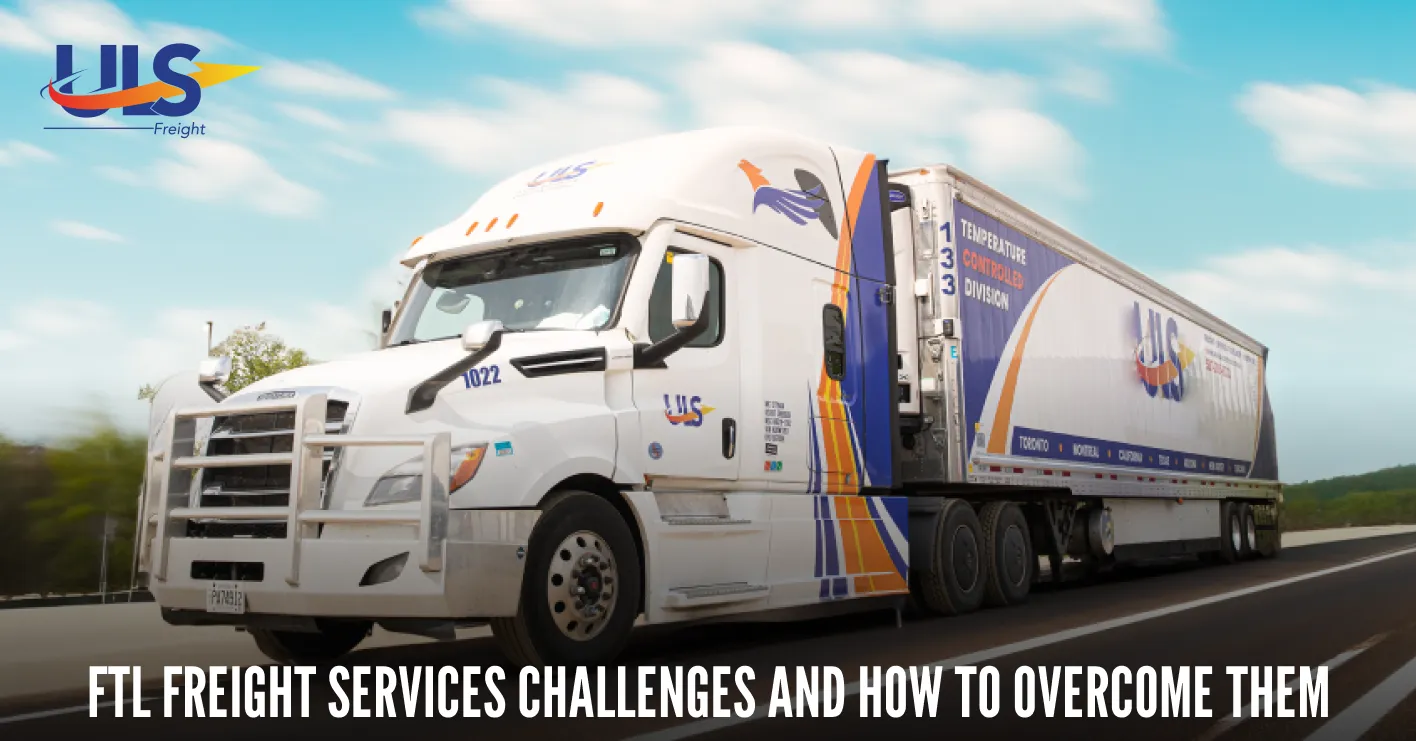
FTL Freight Services Challenges and How to Overcome Them
- ULS Freight
Introduction:
Full Truckload (FTL) freight services are a backbone of modern logistics, ensuring businesses can move goods efficiently across regions. However, FTL shipping comes with its unique set of challenges—from driver shortages to fluctuating freight rates and operational complexities. At ULS Freight, we understand these challenges and provide strategic solutions to ensure smooth, reliable freight management.
Get your goods delivered fast and reliably with our Full Truckload Service today.
In this article, we’ll explore the top 15 FTL freight challenges and practical solutions to overcome each.
1. Driver Shortage & Retention
Challenge:
A chronic shortage of qualified CDL drivers, high turnover rates, and competition among carriers make hiring and retaining talent difficult.
Solution:
Offer competitive compensation and benefits.
Provide ongoing training and career growth opportunities.
Implement driver wellness programs to reduce fatigue.
Use driver recruitment technology to find qualified candidates faster.
2. Capacity Constraints
Challenge:
High e-commerce demand and large shippers booking carriers limit truck availability, causing delays.
Solution:
Build relationships with multiple carriers to expand capacity.
Use Logistics Service Providers (LSPs) to find alternative trucks.
Implement proactive load planning and scheduling to avoid bottlenecks.
Ensure timely port deliveries using our expert Drayage Trucking Services now.
3. Rising Operational Costs
Challenge:
Volatile fuel prices, insurance premiums, and higher driver wages increase operating expenses.
Solution:
Optimize routes using TMS and GPS tracking to reduce fuel consumption.
Negotiate group insurance or multi-year contracts to manage premiums.
Regularly maintain vehicles to prevent expensive repairs.
4. Market Rate Volatility
Challenge:
Freight rates fluctuate due to supply-demand imbalances, seasonal peaks, and economic changes.
Solution:
Use predictive analytics to anticipate rate changes.
Secure long-term contracts with shippers and carriers.
Diversify shipping lanes to reduce dependency on volatile markets.
5. Route Planning & Delivery Complexity
Challenge:
Traffic, road closures, limited truck parking, and time-sensitive cargo complicate deliveries.
Solution:
Invest in route optimization software for dynamic rerouting.
Schedule shipments during off-peak hours when possible.
Train drivers in handling sensitive, perishable, or high-value cargo.
6. Technology & Data Gaps
Challenge:
Integrating modern tech for tracking, procurement, and analytics remains difficult for many carriers.
Solution:
Implement TMS, GPS tracking, and predictive analytics.
Use dashboards to monitor fleet performance and shipment status.
Train staff on digital tools for effective data-driven decision-making.
7. Service Reliability & Customer Expectations
Challenge:
Customers demand faster, transparent, and reliable deliveries, which can be difficult to consistently provide.
Solution:
Provide real-time shipment tracking to customers.
Establish clear communication channels for updates and alerts.
Build redundancy with backup carriers to handle unexpected delays.
8. Sustainability Pressures
Challenge:
Growing environmental concerns require adopting greener logistics without raising costs significantly.
Solution:
Introduce fuel-efficient trucks and alternative energy vehicles.
Optimize routes to reduce emissions and empty miles.
Partner with environmentally-conscious carriers and LSPs.
9. Regulatory & Compliance Challenges
Challenge:
Navigating DOT rules, weight limits, and cross-border regulations is complex and risky.
Solution:
Keep updated on regional and federal transportation regulations.
Use compliance software to monitor hours-of-service and vehicle standards.
Train staff to handle inspections and maintain proper documentation.
Handle cross-border shipments seamlessly with our Customs Clearance Service expertise.
10. Risk Management
Challenge:
Cargo theft, damage, and liability management are constant concerns for FTL shipping.
Solution:
Use GPS tracking, cargo seals, and security protocols.
Invest in comprehensive insurance policies.
Maintain clear contracts outlining liability and responsibilities.
11. Procurement & Network Challenges
Challenge:
Limited data on lanes, volumes, and carriers makes procurement and network management difficult.
Solution:
Leverage data analytics for informed carrier selection.
Maintain relationships with multiple LSPs to diversify networks.
Use contingency planning to ensure backup carriers during peak demand.
12. Operational & Logistics Challenges
Challenge:
Handling high volumes during holidays or e-commerce spikes can strain operations.
Solution:
Plan peak-season schedules in advance.
Consolidate loads and optimize backhauls to reduce empty miles.
Maintain flexibility to adapt to unexpected changes.
Optimize your shipments and storage with our Warehousing Inventory Management solutions.
13. Financial & Budgeting Risks
Challenge:
Fluctuating fuel and freight rates make budgeting unpredictable, especially for smaller carriers.
Solution:
Use cost forecasting tools to anticipate fluctuations.
Maintain a buffer fund for unexpected operational costs.
Monitor KPIs to track spending and improve efficiency.
14. Load & Cargo Specific Challenges
Challenge:
Errors in packaging, documentation, or cargo handling can lead to delays and damage.
Solution:
Train staff on proper documentation and freight classification.
Use standardized packaging and handling procedures.
Implement checks for oversized, hazardous, or temperature-sensitive cargo.
Ship goods safely with temperature control using Refrigerated Transportation Service today.
15. Competitive Market Pressures
Challenge:
High competition forces carriers to offer lower rates and faster deliveries, affecting profitability.
Solution:
Differentiate through service reliability, transparency, and technology adoption.
Focus on customer relationships and tailored solutions.
Use strategic partnerships to expand reach and efficiency.
Conclusion:
FTL freight services face a combination of operational, technological, financial, and regulatory challenges. By leveraging technology, strong carrier networks, proactive planning, and robust risk management, carriers can overcome these challenges while delivering reliable, cost-effective, and sustainable shipping solutions.
At ULS Freight, we specialize in navigating these challenges, ensuring your shipments reach their destination safely, efficiently, and on time.
FAQ Of FTL Freight Challenges
What are the biggest challenges in FTL freight shipping today?
FTL freight challenges include driver shortages, capacity constraints, volatile freight rates, rising fuel and insurance costs, regulatory compliance, and delivery reliability. Full truckload shipping also faces risks like cargo theft, lane imbalances, technology gaps, and sustainability pressures, making professional FTL logistics management essential.
How do rising fuel costs affect full truckload freight rates?
Fuel price fluctuations directly impact FTL freight rates by increasing carrier operating costs. Higher diesel prices raise linehaul charges, fuel surcharges, and total transportation spend. Shippers using FTL logistics must rely on route optimization, fuel-efficient fleets, and contract pricing to control cost volatility.
How can shippers overcome FTL capacity and truck shortages?
FTL capacity issues are solved through multi-carrier networks, logistics service providers, and advanced freight planning tools. Full truckload shippers that use digital freight platforms, predictive demand forecasting, and backup carriers can avoid delays, secure trucks faster, and maintain consistent delivery performance.
What technology helps manage FTL logistics and shipment risks?
Transportation management systems, GPS tracking, real-time visibility tools, and predictive analytics improve FTL logistics control. These technologies help manage route planning, prevent cargo theft, track driver hours, monitor freight status, and improve compliance, allowing full truckload shipments to stay on schedule.
How do regulations and sustainability impact FTL shipping?
FTL freight must follow DOT regulations, weight limits, emissions rules, and cross-border compliance. At the same time, sustainability demands require fuel-efficient trucks, reduced empty miles, and eco-friendly logistics practices. Smart full truckload carriers use green technology and compliance software to stay competitive.
About ULS Freight
We are Road freight forwarder based in Canada, and offering our road freight services all across the USA, Canada, and Mexico for the last 10 years.
Recent Posts
The Global Supply Chain Crisis: How Logistics Companies Are Responding
Cross-Border Freight Challenges: Navigating Compliance in a Global Market