Flatbed Train Trailer: Complete Guide for Intermodal Rail Freight (2026)
- ULS Freight
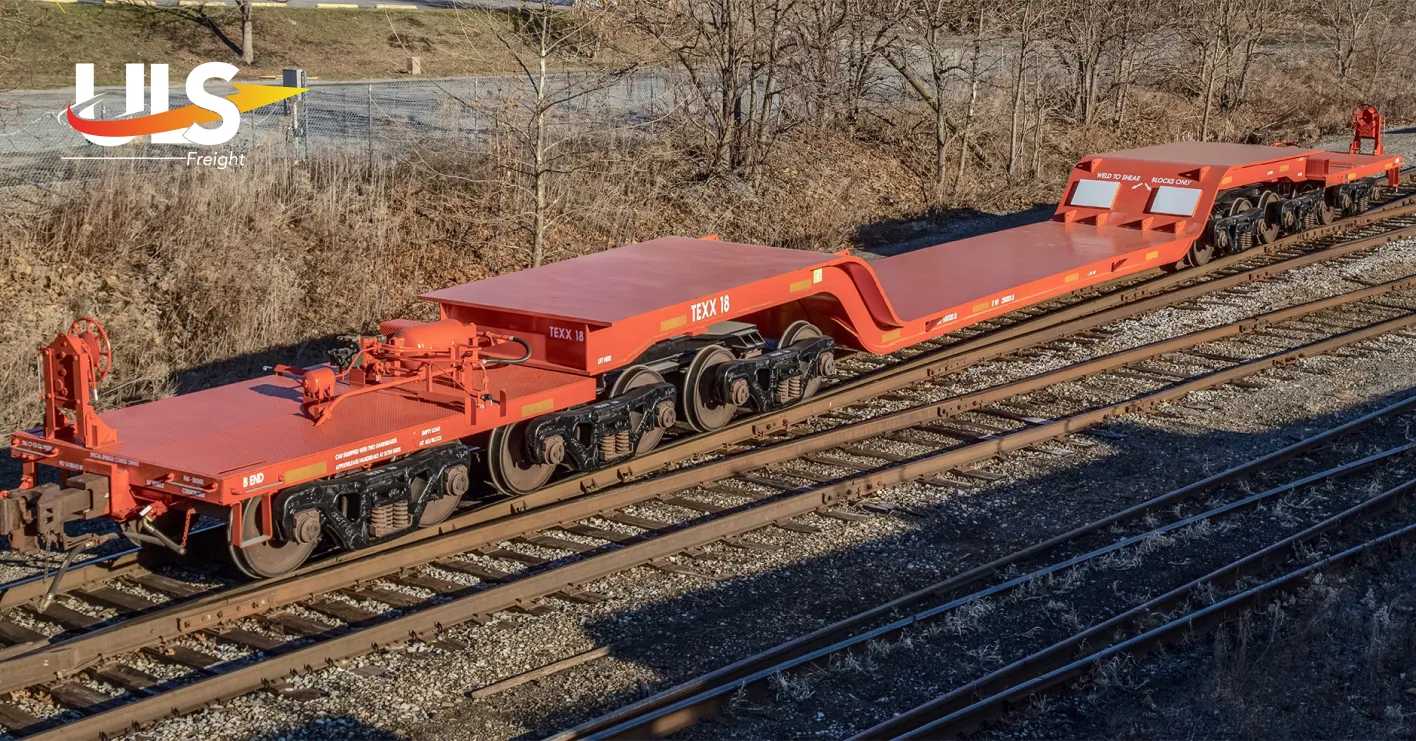
A flatbed train trailer is one of the most efficient solutions for moving heavy, oversized, or irregular freight across long distances.
Ship oversized cargo smarter with flatbed train trailer solutions across Canada & USA.
It combines the strength of rail transport with the flexibility of highway trailers, making it a key part of modern intermodal logistics.
At ULS Freight, businesses across Canada and the USA rely on intermodal solutions like the flatbed train trailer to reduce costs, improve transit efficiency, and handle complex cargo needs.
What Is a Flatbed Train Trailer?
A flatbed train trailer—also called a railway flatbed, bogie flat, or part of a trailer-on-flatcar (TOFC/piggyback) system—is an open-deck railcar designed to carry freight that cannot fit inside enclosed boxcars or standard containers.
In simple terms:
A flatbed train trailer is an open rail platform used to transport heavy, oversized, or irregular cargo safely and efficiently.
The flatbed train trailer allows loading from the top, sides, or rear, making it ideal for industries that move large equipment or construction materials.
Key Features of a Flatbed Train Trailer
The flatbed train trailer is widely used because of its specialized open design.
Open Deck Design
With no roof or sides, the flatbed train trailer can accommodate:
Tall machinery
Wide construction materials
Irregular industrial freight
Reduce freight costs today with reliable flatbed train trailer intermodal shipping.
Intermodal Compatibility (TOFC)
A flatbed train trailer is commonly used in Trailer-on-Flatcar (TOFC) shipping, also known as piggyback service.
This means a highway semi-trailer is driven directly onto the rail flatcar for long-distance transport.
High Capacity for Heavy Loads
Rail systems are designed for weight-bearing efficiency, and the flatbed train trailer supports:
Heavy steel shipments
Industrial equipment
Oversized freight
Flatbed Train Trailer vs Standard Flatbed Trailer
Many shippers confuse rail flatbeds with highway flatbeds.
Here’s the difference:
A highway flatbed trailer operates only on roads
A flatbed train trailer operates on rail networks and supports intermodal freight systems
The flatbed train trailer is essential when freight needs rail efficiency plus road delivery flexibility.
Common Uses of Flatbed Train Trailer Shipping
The flatbed train trailer is best suited for freight that is oversized, bulky, or difficult to enclose.
1. Construction Materials
Flatbed train trailer shipping is ideal for:
Lumber
Pipes
Steel beams
Concrete products
2. Heavy Machinery and Industrial Equipment
Industries use the flatbed train trailer to move:
Excavators
Generators
Manufacturing machines
Move heavy machinery safely using trusted flatbed train trailer rail transport services.
3. Engineering and Freight Trains
Railways also employ flatbed train trailer systems in engineering trains and industrial freight movement.
4. Intermodal Semi-Trailer Transport
In TOFC systems, the flatbed train trailer carries standard road trailers across long distances.
This is especially useful for cross-border freight between Canada and the USA.
Dimensions and Industry Standards
While railway flatcars vary, most flatbed train trailer systems are designed to interface with standard road trailer sizes.
Typical compatibility includes:
48-foot trailers
53-foot trailers
This ensures seamless intermodal transfer between truck and rail.
Benefits of Using a Flatbed Train Trailer in Freight Logistics
The flatbed train trailer is considered one of the most cost-effective freight solutions for long-haul shipping.
Cost Efficiency
Rail transport can reduce long-distance freight costs compared to trucking alone.
Flatbed train trailer shipping allows businesses to optimize budgets without sacrificing capacity.
High Versatility
Because of its open-deck structure, the flatbed train trailer handles freight that enclosed containers cannot.
Improved Intermodal Reach
The flatbed train trailer supports a hybrid shipping model:
Truck pickup
Rail long-haul transport
Truck final delivery
Sustainable Freight Option
Rail freight produces lower emissions per ton-mile than highway-only shipping.
For companies focusing on greener logistics, the flatbed train trailer is a smart choice.
Real-World Example: Flatbed Train Trailer in Action
Imagine a construction firm in Ontario shipping steel beams to Texas.
A flatbed train trailer solution could look like this:
Truck hauls beams to an intermodal rail yard
Cargo is loaded onto a flatbed train trailer
Rail moves freight efficiently across borders
Truck completes final-mile delivery
This approach reduces cost, fuel use, and highway congestion.
Practical Tips for Shipping on a Flatbed Train Trailer
To maximize safety and efficiency, follow these best practices:
Secure Proper Load Restraints
Use:
Chains
Straps
Blocking and bracing
Flatbed train trailer cargo must be stabilized against rail vibration.
Confirm Oversize Regulations
Cross-border shipments between Canada and the USA may require:
Permits
Escorts
Special routing
Work With an Experienced Freight Forwarder
Intermodal rail freight requires coordination between:
Rail carriers
Trucking providers
Customs clearance
ULS Freight helps businesses manage the entire flatbed train trailer shipping process.
Get fast cross-border delivery with flatbed train trailer TOFC piggyback solutions.
Flatbed Train Trailer and TOFC Explained Simply
Trailer-on-Flatcar (TOFC), or piggyback service, is one of the most common uses of the flatbed train trailer.
Definition-style answer:
TOFC is the practice of carrying highway semi-trailers directly on railroad flatcars for long-distance freight movement.
This system provides:
Faster long-haul transport
Reduced highway wear
Better intermodal integration
Why Flatbed Train Trailer Freight Matters in 2026+
In 2026 and beyond, supply chains require:
Flexibility
Intermodal scalability
Cost-effective heavy freight movement
The flatbed train trailer remains future-proof because it supports:
Oversized industrial cargo
Cross-border trade growth
Sustainable freight strategies
With increasing demand in Canada-USA logistics, flatbed train trailer solutions are becoming essential.
FAQ: Flatbed Train Trailer Shipping
What is a flatbed train trailer?
A flatbed train trailer is an open-deck railway flatcar designed to transport heavy, oversized, or irregular freight that cannot fit into enclosed railcars.
What is TOFC or piggyback service?
TOFC (Trailer-on-Flatcar) is a system where highway semi-trailers are loaded onto rail flatcars for long-distance shipping.
What industries use flatbed train trailers most?
Construction, manufacturing, oil and gas, and heavy equipment industries rely heavily on flatbed rail transport.
Are flatbed train trailers only for oversized cargo?
No. They are mainly used for oversized freight but also support intermodal trailer transport and industrial shipments.
Can flatbed train trailer shipping work between Canada and the USA?
Yes. Flatbed rail intermodal freight is widely used for cross-border shipping, especially for heavy and irregular cargo.
Conclusion: Flatbed Train Trailer Shipping With ULS Freight
The flatbed train trailer is one of the most versatile and efficient freight solutions for oversized cargo, intermodal shipping, and TOFC rail systems.
From machinery and steel beams to semi-trailers moving cross-border, this open-deck rail option is essential for modern logistics.
Request a freight quote now for flatbed train trailer shipping with ULS Freight.
If your business needs reliable flatbed rail freight across Canada and the USA, ULS Freight provides trusted intermodal expertise, freight coordination, and customized transport solutions built for 2026 and beyond.
About ULS Freight
We are Road freight forwarder based in Canada, and offering our road freight services all across the USA, Canada, and Mexico for the last 10 years.
Recent Posts
The Global Supply Chain Crisis: How Logistics Companies Are Responding
Cross-Border Freight Challenges: Navigating Compliance in a Global Market