
Containerized Shipments: Definition, Benefits, and How Containerization Revolutionizes Global Shipping
- ULS Freight
By ULS Freight | Canadian Logistics Solutions
Introduction
Before containerization, loading a ship meant moving thousands of individual crates, barrels, and loose items by hand. It took days. Cargo arrived damaged, stolen, and mislabelled at rates that made international trade expensive and unpredictable. A single transatlantic shipment required armies of dockworkers and generated losses that were simply accepted as the cost of doing business.
Shipping smaller volumes doesn’t mean compromising on speed or security. With LTL Freight Services, your cargo moves efficiently using shared containers while maintaining priority handling, cost-effective rates, and seamless transit from origin to destination across Canada and international routes.
The standardized shipping container ended that era. Today, over 90 percent of the world’s traded goods move inside containers. A containerized shipment transfers from vessel to rail to truck without anyone opening the doors. That seamless movement is what containerization in logistics actually means, and why every business shipping freight internationally needs to understand how it works.
What Is a Containerized Shipment
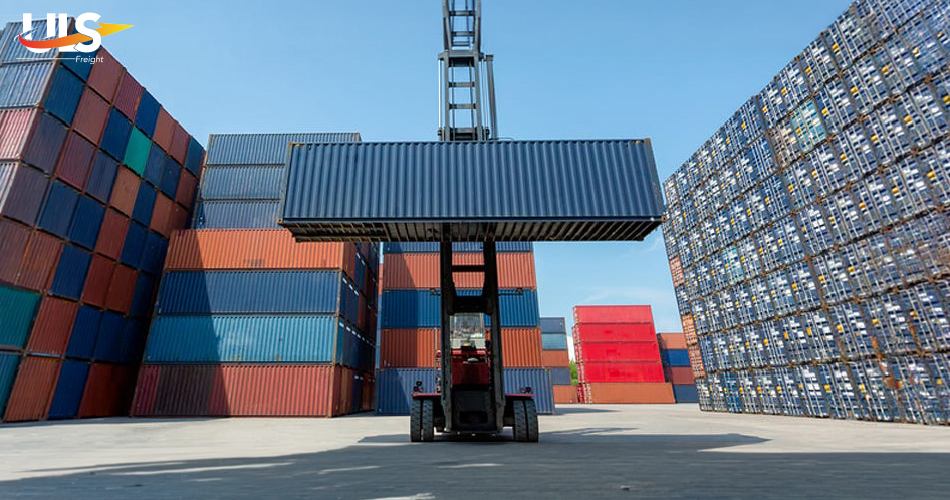
A containerized shipment is cargo packed into a standardized steel container and transported across one or more modes as a single sealed unit. Once loaded and sealed at origin, the container moves through every leg of the journey without repacking or manual transfer of the cargo inside.
The standardization comes from ISO shipping containers, which define the dimensions, corner fittings, and structural specifications that allow containers to stack on vessels, lock onto rail flatcars, and mount on truck chassis anywhere in the world. The two dominant sizes are the 20-foot equivalent unit and the 40-foot equivalent unit, which are the standard units of measurement across all global container transport.
For large shipments needing exclusive container space, our Full Truck Load Services provide faster transit times, reduced handling risk, and better freight rates. Ensure your critical cargo moves securely and directly from origin to destination without unnecessary delays or transfers.
FCL vs LCL: Choosing the Right Load Type
Full Container Load (FCL)
A full container load means one shipper fills and uses the entire container. The container is sealed at origin and does not open until it reaches the destination. FCL delivers faster transit times, lower per-unit handling risk, and better freight rates at volume. It is the right choice when your shipment is large enough to justify exclusive container use.
Less Than Container Load (LCL)
A less than container load consolidates cargo from multiple shippers into one container. Each shipper pays only for the space their freight occupies. LCL moves through a container freight station on both ends, where a consolidator assembles the combined load at origin and separates it at destination.
Oversized machinery, vehicles, or irregular cargo require specialized transport. Our Flatbed Freight Services safely accommodate heavy or awkward loads, ensuring intermodal compatibility and timely delivery while reducing risk of damage during container handling and transit.
LCL suits businesses that ship regularly but cannot fill a container on their own. The tradeoff is longer transit time due to the handling steps at each container freight station. For smaller volumes, it is the most cost-efficient way to access container shipping.
Container Types and What They Carry
The container types available in global container transport reflect the full range of commodities moving through international supply chains.
Dry containers are the standard steel box used for general cargo including consumer goods, industrial parts, and packaged products
Reefer containers are refrigerated units that maintain precise temperature ranges for perishables, pharmaceuticals, and temperature-sensitive chemicals
Tank containers carry liquids and gases including chemicals, food-grade liquids, and industrial fluids in a sealed cylindrical vessel within the standard ISO frame
Open top containers handle oversized cargo that requires crane loading from above rather than through standard doors
Flat rack containers carry heavy machinery, vehicles, and structural components that exceed standard container dimensions on one or more sides
Connecting ports, rail terminals, and warehouses seamlessly, Drayage Trucking Services provide the crucial first and last-mile movement of your containerized shipments, ensuring your cargo arrives on schedule with full tracking and minimal handling delays.
Why Containerization in Logistics Changed Global Trade
The core advantage of a containerized shipment is intermodal compatibility. Intermodal containers transfer between ship, rail, and truck without repacking. That single capability eliminated the most time-consuming and damage-prone stage of freight handling: manually transferring loose cargo between transport modes.
Port turnaround times dropped from days to hours. Cargo theft and damage rates fell sharply because sealed containers provided security that break-bulk freight never could. Shipping costs per unit dropped as vessel capacity scaled to carry thousands of stacked containers per voyage.
When speed is critical, our Air Freight Services move time-sensitive cargo faster than sea or ground transport. Ideal for urgent international shipments, perishables, and high-value goods, our service guarantees direct routing, priority handling, and reliable delivery windows worldwide.
For Canadian businesses, containerization means a manufacturer in Ontario can ship to a buyer in Asia with one booking, one document set, and a chain of custody that holds from warehouse to warehouse. ULS Freight manages that chain at every point, from container selection and container freight station coordination to customs clearance and final delivery.
Move Your Cargo Smarter: Let ULS Freight Put It in the Right Container
Understanding the difference between FCL and LCL, selecting the right container type for your cargo, and working with a provider who manages the full chain from container freight station to final delivery determines how efficiently your freight moves. The wrong choice at any one of those steps generates cost, delay, and risk that compound across the journey.
ULS Freight provides container shipping solutions across major global trade lanes with routing, documentation, and customs handling built into every shipment. Contact ULS Freight today to discuss the right container option for your next international move.
About ULS Freight
We are Road freight forwarder based in Canada, and offering our road freight services all across the USA, Canada, and Mexico for the last 10 years.
Recent Posts
The Global Supply Chain Crisis: How Logistics Companies Are Responding
Cross-Border Freight Challenges: Navigating Compliance in a Global Market

Freight Forwarding vs. Freight Brokering: Explore the Best Option For Yourself
Top 5 Strategies to Reduce Freight Shipping Costs Without Compromising Speed

The Impact of Canada’s Harsh Winters on Supply Chains & How ULS Freight Helps
Choosing Between Air & Sea Freight for Your Business – The Complete Guide
How 3PL Logistics Solutions Improve Supply Chain Efficiency for Modern Businesses
Ultimate Guide to White Glove Delivery
Freight Forwarding Services: A Complete Guide to Canadian and Cross-Border Shipping
What is White Glove Service & Why It Matters
Frequently Asked Questions (FAQs)
A containerized shipment is cargo packed into a standardized steel container that is transported as a single sealed unit. Once loaded at the origin, the container moves through ships, trains, and trucks without being opened or repacked. This system—known as intermodal transport—reduces handling errors, prevents cargo damage, and ensures security throughout the journey. It allows businesses to ship goods internationally with a single booking, consistent documentation, and traceable movement from warehouse to warehouse.
Full Container Load (FCL): One shipper uses an entire container, sealed at origin until it reaches the destination. This method offers faster transit, lower handling risk, and cost efficiency for large shipments.
Less Than Container Load (LCL): Multiple shippers share the same container, paying only for the space their goods occupy. LCL cargo moves through a Container Freight Station (CFS) for consolidation at origin and deconsolidation at destination. It is ideal for smaller shipments but may have slightly longer transit times due to handling at CFS.
ISO containers are standardized steel boxes built to internationally recognized dimensions and structural specifications. These standards allow containers to fit universally on ships, railcars, and trucks anywhere in the world. ISO containers ensure intermodal compatibility, secure stacking on vessels, and efficient cargo handling. Without ISO standards, global trade would be slower, more costly, and prone to damage during transfer between transport modes.
A reefer container is a refrigerated unit designed to maintain precise temperature ranges during transit. Businesses should use reefer containers for:
Perishable food (fresh, frozen, or chilled)
Pharmaceuticals and medical supplies
Temperature-sensitive chemicals and industrial products
Reefer containers maintain temperature control across ships, trucks, and rail, preventing spoilage and ensuring compliance with safety standards during long international shipments.
A Container Freight Station (CFS) is a facility for consolidating and deconsolidating LCL cargo.
At origin: Freight from multiple shippers is received, verified, and packed into a shared container.
At destination: The container is unloaded, and each shipper’s goods are separated for pickup or delivery.
CFS operations ensure that small shipments can access container shipping efficiently without occupying a full container, while maintaining safety, security, and documentation accuracy.
Standard Sizes: 20-foot and 40-foot equivalent units (FEU). The 40-foot container roughly doubles the capacity of the 20-foot unit. High-cube containers add extra vertical clearance for bulky but lightweight cargo.
Types of Containers:
Dry container: For general cargo and packaged goods
Reefer container: For temperature-sensitive cargo
Tank container: For liquids and gases
Open-top container: For oversized cargo needing top loading
Flat-rack container: For heavy machinery, vehicles, or structural components exceeding standard dimensions
Choosing the right size and type ensures optimal space usage, safety, and cost efficiency.
Yes. One of the main advantages of containerized shipping is intermodal transport. Containers move seamlessly between ships, trucks, and rail without repacking.
Rail is a major component in Canada, connecting ports like Vancouver, Montreal, and Halifax to inland cities such as Toronto, Calgary, and Winnipeg.
Containers retain their seal and security across modes, reducing theft, damage, and delays.
ULS Freight coordinates every step of this intermodal journey, ensuring on-time delivery and compliance with Canadian and international logistics standards.