
Aircraft Carriers Explained: How Floating Airbases Dominate Modern Naval Warfare
- ULS Freight
Aircraft carriers are among the most formidable tools in modern naval warfare. These massive floating airbases allow nations to project air power across oceans without relying on land-based airfields. They serve as hubs for fighter jets, helicopters, and unmanned aerial vehicles, providing unmatched flexibility for military operations worldwide.
An aircraft carrier is not just a ship—it’s a mobile command center capable of launching and recovering aircraft, coordinating missions, and supporting humanitarian and disaster relief operations. Modern carriers combine advanced propulsion, defensive systems, and onboard technology to operate efficiently in international waters while maintaining combat readiness.
The Role of Aircraft Carriers in Modern Navies
Aircraft carriers allow navies to project air power far from their home shores. Unlike traditional ships, they provide a stable platform for launching multiple aircraft in rapid succession, extending a country’s strategic reach. This capability makes carriers central to offensive and defensive operations during conflicts.
Key Points:
- Serve as mobile airbases
- Extend strategic reach without land bases
- Support both combat and humanitarian missions
- Enable rapid deployment of aircraft
Structure and Technology of Aircraft Carriers
Modern aircraft carriers are engineering marvels, designed to operate hundreds of aircraft while remaining seaworthy in harsh conditions. They feature angled flight decks, catapult systems, arresting wires, and elevators for aircraft movement. Nuclear-powered carriers offer near-unlimited range, while conventional carriers rely on fuel for propulsion.
Defensive and Command Features
Defensive technologies include radar systems, missile defense, electronic warfare suites, and anti-submarine measures. Command and control centers coordinate air and naval operations, ensuring precise and efficient mission execution.
Aircraft Carrier Highlights:
- Angled flight decks for safe landings
- Catapults and arresting systems for launch/recovery
- Advanced radar and missile defense systems
- Nuclear or conventional propulsion options
Types of Aircraft Carriers
Aircraft carriers vary based on size, power, and intended use.
Carrier Types:
- Supercarriers: Nuclear-powered, global reach
- Light carriers: Smaller air wings, tactical flexibility
- Amphibious assault ships: Helicopters and VTOL aircraft
- Helicopter carriers: Focused on vertical flight operations
Amphibious assault ships can operate as small carriers, deploying helicopters and vertical takeoff aircraft for rapid-response missions. Each type fulfills a specific operational requirement, from global force projection to coastal defense and disaster relief.
Aircraft Operations on Carriers
Aircraft carriers launch and recover various aircraft, including fighter jets, transport planes, and drones. Catapults accelerate aircraft for takeoff, while arresting wires ensure safe landings. Skilled pilots undergo rigorous training to operate under tight constraints, often requiring precise timing and coordination.
Operational Insights:
- Launch: Catapults or short takeoff systems
- Recovery: Arresting wires and angled decks
- Aircraft maintenance: Continuous upkeep on deck
- Flight deck management: Precision teamwork
Maintenance, refueling, and rapid aircraft turnaround are vital for continuous operations. Advanced deck management systems, including specialized crew teams and automated guidance systems, ensure the carrier can conduct extended missions with efficiency and safety.
Strategic Advantages of Aircraft Carriers
Aircraft carriers allow nations to assert control over vast maritime areas. Their presence alone can deter potential adversaries, while their air wings provide intelligence, surveillance, and strike capabilities. In addition, carriers facilitate joint operations with allied forces, enhancing overall military coordination.
Advantages:
- Force projection and deterrence
- Global mobility and strategic flexibility
- Intelligence and surveillance capabilities
- Humanitarian aid deployment
The ability to quickly reposition forces globally makes carriers invaluable for modern navies, offering flexibility unmatched by traditional warships. They also provide a credible response during humanitarian crises, delivering supplies and medical aid rapidly.
The Future of Aircraft Carriers
Technological advances are shaping the next generation of aircraft carriers. Electromagnetic catapults, autonomous aircraft, and enhanced stealth features improve operational efficiency and survivability. Modern carriers also integrate advanced cyber defense and networked command systems, making them more resilient in contemporary conflict environments.
Future Trends:
- Electromagnetic catapult systems
- Integration of drones and UAVs
- Enhanced cyber defense capabilities
- Stealth and survivability improvements
Unmanned aerial vehicles (UAVs) and drones are expected to play an increasing role in carrier operations, extending reconnaissance and strike capabilities while reducing risk to personnel. These innovations ensure aircraft carriers remain central to naval strategy for decades to come.
About ULS Freight
We are Road freight forwarder based in Canada, and offering our road freight services all across the USA, Canada, and Mexico for the last 10 years.
Recent Posts
The Global Supply Chain Crisis: How Logistics Companies Are Responding
Cross-Border Freight Challenges: Navigating Compliance in a Global Market

Freight Forwarding vs. Freight Brokering: Explore the Best Option For Yourself
Top 5 Strategies to Reduce Freight Shipping Costs Without Compromising Speed
The Impact of Canada’s Harsh Winters on Supply Chains & How ULS Freight Helps
Choosing Between Air & Sea Freight for Your Business – The Complete Guide
How 3PL Logistics Solutions Improve Supply Chain Efficiency for Modern Businesses
Ultimate Guide to White Glove Delivery
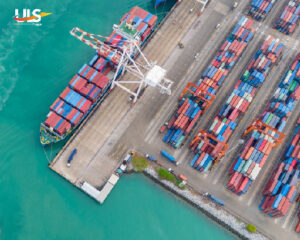
Freight Forwarding Services: A Complete Guide to Canadian and Cross-Border Shipping
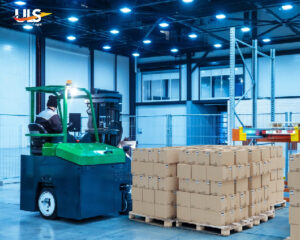
What is White Glove Service & Why It Matters
Frequently Asked Questions (FAQs)
Aircraft capacity depends on the type of carrier:
- Supercarriers (e.g., USS Gerald R. Ford class) can carry 60–90 aircraft, including fighter jets, helicopters, drones, and surveillance planes.
- Smaller carriers or light carriers can operate 20–40 aircraft, optimized for regional missions.
- The deck layout, hangar space, and maintenance operations determine the carrier’s operational efficiency.
- Aircraft are rotated for continuous operations, with rapid turnaround on deck managed by specialized crews.
Key Points:
- Supports high sortie rates, enabling multiple aircraft launches in succession.
- Analogous to ULS Freight, which optimizes fleet capacity for various shipment types efficiently.
- Carrier air wings include F-35C Lightning IIs, F/A-18 Super Hornets, E-2D Hawkeyes, and UAVs for reconnaissance.
While carriers are heavily defended, they remain high-value targets:
- Layered defense systems: missile interceptors, electronic warfare systems, and anti-submarine measures.
- Escort ships in a Carrier Strike Group (CSG) provide protection against air, surface, and underwater threats.
- Electronic countermeasures (ECM) and radar systems detect and neutralize incoming threats.
- Despite vulnerabilities, carriers maintain dominance due to mobility, strategic positioning, and real-time threat response.
Key Points:
- Considered “floating fortresses” due to their integrated defenses.
- Carriers adapt to threats like hypersonic missiles and drone swarms.
- Mirrors ULS Freight’s real-time tracking and security protocols, ensuring safe, timely delivery of valuable cargo.
Nuclear-powered carriers have unmatched operational endurance:
- Reactors can operate for 20–25 years without refueling.
- Operational limits are set by crew provisions, maintenance cycles, and aircraft fuel rather than the reactor itself.
- This allows global deployment without frequent port calls.
Key Points:
- Enables continuous presence in international waters, projecting power worldwide.
- Can remain at sea for extended missions like humanitarian response or combat operations.
- Similar to ULS Freight long-haul shipping, which maximizes efficiency with minimal stops.
- Supercarriers require deep waters due to large draft; unsuitable for shallow coastal areas.
- Amphibious assault ships and light carriers can operate closer to shore, supporting rapid-response or vertical takeoff operations.
- Naval strategy ensures carriers are deployed in optimal operational zones to avoid grounding or vulnerability.
Key Points:
- Route planning and water depth assessment are critical for operational safety.
- Smaller carriers provide tactical flexibility, similar to how ULS Freight selects alternative routes to navigate congestion or restricted zones.
- Ensures efficient and secure deployment of air power globally.
Carriers are highly versatile platforms for disaster relief:
- Equipped with medical facilities, cargo storage, helicopters, and UAVs for aid delivery.
- Can evacuate civilians and provide rapid assistance in remote or disaster-stricken areas.
- Support logistics includes transporting supplies, food, water, and medical aid directly to affected zones.
Key Points:
- Operates independently of local infrastructure, making them invaluable for global humanitarian efforts.
- Reflects ULS Freight’s white-glove and critical cargo services, ensuring sensitive deliveries reach even hard-to-access locations.
- Carriers demonstrate dual-use capability, balancing combat readiness with humanitarian missions.
Carrier pilots undergo specialized, high-intensity training:
- Training includes catapult takeoffs, arrested landings, deck operations, and formation flying.
- Emphasizes precision timing and coordination, as flight decks are compact and operations are continuous.
- Pilots are trained to respond to emergencies, adverse weather, and high-tempo sortie schedules.
Key Points:
- Deck crews and air traffic controllers work in perfect coordination for safety and efficiency.
- Pilots must master vertical takeoff and landing (VTOL) for helicopters and drones.
- Analogous to ULS Freight’s logistics team, which coordinates multiple shipment types and routes for timely delivery.
Carriers maintain dominance through technology, strategy, and flexibility:
- Carrier Strike Groups (CSGs) provide layered protection and force projection.
- Equipped with advanced radar, missile defense, electronic warfare, and cyber defense systems.
- Future carriers integrate drones, UAVs, and autonomous aircraft for reconnaissance and strike, reducing human risk.
- Strategic positioning allows rapid global response for combat or humanitarian operations.
Key Points:
- Carriers act as “100,000 tons of diplomacy”, serving as both deterrence and rapid-response forces.
- Project air power without reliance on foreign bases.
- Mirrors ULS Freight’s global operations, ensuring efficient deployment of resources with advanced technology and real-time monitoring.